-
Sewing Patterns
-
Fabric
- Sewing Supplies
- About
- Blog
- Gallery
-

by Cynthia Anderson
In this blog I will demonstrate how to make a bust adjustment for View C of 222 Vintage Vests pattern. While the Folkwear 222 Vintage Vests pattern offers three different style versions, View C has a double-breasted front closure and four darts that create a snug fit at the bust. The focus of this blog is to show how to create a custom fit by adjusting the position of the front bust darts, using a test muslin. There are instructions in the pattern on how to do this, but I also thought it would be helpful to see someone else do it and show you how .
To get started, determine your approximate vest size using the Sizing Chart included in the 222 Vintage Vests pattern. Find the bust measurement on the sizing chart that corresponds with your bust measurement. I made a size medium, which is for measurements 36"(91cm) to 38"(97cm) at the bust.
Make a Test Muslin
I made a test muslin of the vest pattern (view C) according to the pattern instructions, but I only used the pattern pieces needed to determine fit and for making the bust adjustments. I cut out the Front, Side Back, and Back. The collar and lining are not needed for this exercise.
Make the vest muslin for your size according to the instructions. Fold darts along the Fold Lines, with right sides together, and baste along the dart stitching lines. Using a basting stitch makes it easier to remove the stitching when adjusting. Press the darts lightly.
Note: Wear the muslin wrong side out and make the dart adjustment markings on the wrong side, and to make it easier to make adjustments.
Ensure a Good Fit
Try on the muslin (inside out) and match and pin the center front of the vest to hold it closed. The vest will fit more accurately if you include any undergarments and garments you intend to wear under the vest. For instance, don't make adjustments over a t-shirt, if you plan on wearing a peasant shirt underneath the vest. For the purposes of this demonstration I have not used undergarments or a shirt on my dress form.
Ideally, you want to make the adjustments while wearing the muslin yourself with the help of a sewing buddy to do the pinning. For this demonstration, I used a dress form made to my size.

Determine the Bust Point
For the most flattering fit, darts should end about 1/2" (13mm) below your bust point. With the vest on, determine the widest, or fullest, part of your bust. This is the Bust Point or Bust Apex. Often nipple position is mistaken for the bust point, but this does not always ensure the best fit. Wear a bra to help finding the bust point easier.
Stand up straight and view your profile while looking in a mirror. Stretch a length of ribbon or string horizontally across the fullest part of the bust and secure with a pin to hold.


I have used a blue dot sticker to mark the bust point on the ribbon, to make it easier to see.

I inserted a pin into the center of the dot and transferred this point using a pen/pencil on the vest muslin.

Adjust the Dart Placement
The original darts may fall to the left or to the right of your newly marked bust point. To adjust the darts to align with your bust points, take off the vest and remove the original dart stitching and press the muslin flat. Redraw (on the wrong side) the new Dart Fold Lines so that the new dart points fall 1/2" (13mm) on either side of and below the bust point.
Follow the series of illustrations and instructions below for a step by step explanation.
Use the illustrations below as a guide to make the bust adjustment on the wrong side of your test muslin. The illustration below shows the new bust point, the original flat darts, and center front line. The circle around the bust point shows the 1/2" (13mm) space needed below the bust point.

Mark the center between the original darts at the bottom edge of the vest. Draw a line (dashed here) connecting the line 1/2" (13mm) below the bust point and the center between the two darts.

Draw a small horizontal line 1/2" (13mm) below the bust point, and measure 1/2" (13mm) on either side of the new vertical bust point line. Mark where these lines intersect to create the new dart points.

Draw in the new Dart Fold Lines. The new Dart Fold Lines should begin at the same point on the bottom edge of the vest as the original dart fold line markings. They will connected to the new dart points. Re-draw in the new Dart Stitching Lines with chalk or erasable marker. The Dart Stitching Lines should also start at the same place as the original lines. Keep the darts equally spaced on either side of the bust point center line.

Connect the the original bottom dart edges to the new dart points to create the new dart stitching lines.

Baste the new darts and try the vest muslin on, right side out and evaluate the fit. The darts should not extend beyond the 1/2' (13mm) line under the bust point.
Once you are satisfied with the bust adjustment fit transfer the re-drawn darts to your pattern for future reference. Also re-draw in the new darts on both sides of the front and on the lining pieces. You may also need to even off the bottom edge of the front pieces.
Look closely below to compare original darts lines and the new stitched darts.


Even a slight adjustment can make a noticeable difference in the look and feel of how a garment fits. My bust adjustment changed only slightly, but the result is obvious both visually and in the way the fit feels when worn. Making a muslin is a great way to try out new skills, and test for fit, enabling you to make your final project with confidence.

Making a bust adjustment for View C of the Folkwear 222 Vintage Vests is not hard and it is a skill you can apply to other projects with darts. You only have to learn a few easy steps to create a custom bust fit for this charming vest.
Check-out the blogs Vintage Vests Inspiration, Add a Folkwear 222 Vintage Vest to Your Wardrobe, and Make a 222 Vintage Vest for Fall to see how fun and easy it is to make a vest. Fall is here and the 222 Vintage Vests Paper Pattern is a great pattern for layering! Find the PDF pattern here. Make one or all the styles offered in the pattern to add new life to your fall and winter wardrobe.

by Cynthia Anderson
In this blog I am going to show you how I made View A of the 222 Vintage Vests pattern, adding a contrasting facing for a custom look. See Add a 222 Vintage Vest to Your Fall Wardrobe and Vintage Vest Inspiration for more ideas to get you started in making your own vest.
I used a light-weight dark navy wool suiting with a white pin-stripe for the vest front pieces, the inside facings, and the back belt. For the contrasting front facing I used a similar weight wool plaid. For the back, lining, and the pocket I used a dark navy acetate lining.
Feel free to make the back of the vest out of the same material as the front of the vest if you like. The belt is optional too. This pattern shows you how to easily line every vest. And I do recommend keeping the linking, for not only a clean interior finish, but because a lining makes wearing a vest truly luxurious. Vests are a great use of small amounts of fabric that can be used in any number of ways.
If welt pockets are new to you or you need a refresher, make a muslin. Practice transferring the pocket opening, adding the welts, and the pocket bag on a tightly woven scrap of fabric. Use a scrap of lining to make the pocket bag, so you will get a feel for what it is like to work with a slippery fabric.
Vest Front Construction
Welt Pockets
First, I transfered the pocket markings (welt pocket opening) to the right side of the vest. For dark fabrics a fine chalk pencil works well. Use a water soluble pen or black chalk pencil for light colored fabrics.
My favorite way of transfering markings like this is while the pattern piece is still attached to the fabric. Insert pins into the corners of the pocket opening, with the pin sticking through the fabric. Then, mark the corners of the pocket opening before completely removing the pattern from the fabric. Connect the dots using a ruler. I did not transferbthe stars and dots to the fabric to keep my work tidy. But I kept the pattern handy to use as a reference. I made all four of the pockets for View A, but feel free to make as many as you like, or none at all. Or add a patch pocket!


I added fusible interfacing over the pocket areas on the wrong side of the vest to reinforce the fabric. You could use sewn-on interfacing if the fabric is heavy enough to allow for invisible stitching on the right side of the fabric.

I traced the all pocket openings with a machine basting stitch to provide a guide for aligning the welt tabs and for cutting the pocket open later on. I stitched over the center slash line as well. This extra bit of stitching keeps the stitching visible on each side of the fabric long after the chalk has worn away.


Add the Optional Facing
To add a contrasting facing to the out side of the vest, I used the same facing pattern piece intended for the inside facing of the vest. Treat the facing as a trim or applique and stitch it to the outside of each vest front. It is actually easier to add the facing while the fabric is still flat and before the welt pockets are added.
I cut the plaids so that they matched at the center front. To help ensure the plaids match, I cut each facing piece separately, paying attention to where the pattern piece match/align to the plaid for each side. Once one side of the facing is cut, I flipped the pattern for the opposite side facing. If you don't have to worry about pattern matching, then feel free to cut both pieces at once.
I made a machine baste-stitch on the 1/2" (13mm) seam line on the un-notched edge of each of the facings pieces. Use the basting stitch as a guide I turned under a clean smooth edge and press the edge.


I pinned and stitched the the wrong side of the facing to the right side of vest on the center front edge, matching notch 5. I made the stitching just inside the 1/2"(13mm) seam allowance.

Then, I top-stitched the opposite un-notched edge close to the turned under edge to hold the facing in place and to create a clean finished edge.

Now I could treat the vest front as one piece of fabric and continue the construction.

Make the Welt Tabs
Now, let's get back to the welt pockets. I added interfacing to the wrong side of half the pocket welts for each welt C and D tabs.
If using fusible interfacing, pre-trim the interfacing as seen below before ironing to the fabric.
If using sewn-in interfacing, machine-baste along the seam lines. Then sew invisibly (by hand) along the horizontal Center Fold Lines. Trim the interfacing close to the basting stitches. The stitched interfacing has the benefit of making it easy to see which is the wrong side of the tab.
Note: I am using fusible interfacing because my fabric is a light-weight wool suiting.

With the right sides of the welt tabs together, I folded the welt along the Center Fold Line and stitched the short ends together, using the 1/4" (6mm) seam allowance.

I trimmed the corners, turn right side out, and press.

Then, I machine-basted the remaining long edges together using the 1/4" (6mm) seam allowance.

Add the Welts and the Pocket Bag to the Pocket Opening
I basted the interfaced side of the welt tabs to the right side of the vest, along the lower welt seam lines. The folded edge is positioned facing downward. The long raw edge of the welt meets at about the slash line.

I transferred the pocket opening lines to the pocket bags as indicated on the pattern. With right sides together, I pinned the pockets to the right side of the front (on top of the welt tab), matching the dots and stars as marked on the pattern. I stitched along the pocket opening seam lines, pivoting at the small dots and stars. I had to be careful not to catch the welt tabs in the short sides of the rectangles.


I then carefully slashed through the Pocket and Front along the slash line between the seams lines, clipping diagonally to the small dots and stars.

Next, I turned each pocket half to the inside of the vest, and pressed both of the pocket halves down on the horizontal Center Fold Line.
I pressed the welt tab up on the outside (right side) of the vest. And, I pinned and stitched the remaining raw edges of the pocket bag, right sides together to close up the pocket. I removed any basting stitching if it was visible.

On the outside (right side) of the vest, I hand whip-stitch (or machine-stitch) along both short ends to secure the welt tab. I also added a few extra stitches to the top of each corner to reinforce.

Back Belt
The patterns calls for the belt to be made out of lining fabric. The belt is best made out of a light weight material to not only cut down on bulk against the wearer's back, but a lighter fabric also makes adding the belt-buckle hardware easier and less bulky. Vests typically have belts made of lining material, but I decided to use the same light-weight wool suiting the front of the vest is made from.
If using a lighter-weight fabric like lining fabric, add fusible interfacing approximately the same weight as the belt fabric for more durability.
You could also replace the belt buckle with a button/buttonhole or create a faux buttonhole look by using a snap with a button stitched over the top of the snap.
With right sides together, I stitched the belts on three sides, leaving the notched edge open.


With right sides together, I then pinned and stitched the center back vest seam, making sure to keep the belt pieces from getting caught in the stitching.

I repeated this for the back lining as well.
In the photo below, the vest back is in the foreground and the back lining is in the background. Both backs are viewed wrong sides facing up.

Attach the Front and Back of the Vest
With right sides together, I stitched the center back neck band seam of the Vest Fronts.

The photo below shows the shoulder seam snipped on right side of vest.


Then, with right sides together, I pinned and stitched the shoulder/back neck band with right sides of the front and back together, pivoting at the dot and matching the center back seams. I failed to take a photo of this step, but it is also pretty straighforward.
Attaching the Lining
I stitched the shoulder seams of the lining right sides together, matching the dots - and pressed them open.

Instead of cutting my Lining Facing out of the lining material, I used the pin-stripe wool suiting. Typically, the interior facings are made from the lining fabric. But, I continued to use the main outer fabric on the inside. I like the the way the facing looks and feels on the interior of the vest, especially when worn unbuttoned. Of course, this is totally up to you. I cut both the lower front and front facings out of the pin-stripe wool suiting.
Because of the extra layer of facing fabric added on the outside front of the vest, I eliminated using the interfacing the pattern recommends. The three layers of wool suiting are sufficient enough to support the use of buttonholes and buttons. But if you are not adding an extra layer of interfacing, or you are using lightweight lining fabric, you might want to use the interfacing.

With right sides together, I pinned and stitched the lower front facing to the front lining, and pressed the seams open.

I then pinned and stitched the center back seam of the front facing, right sides together (and pressed seams open).

With right sides together, I also pinned and stitched the front facing to the lining, clipping along the curves, and matching the Center Back seams. The seam is pressed towards the facing.

I added stitching close to the edge of the facing to create strength and add a nice finish.


With right sides together, I pinned the lining to the outer vest, matching the Center Back seams and notches.

Then, I stitched along the outer front opening edges, pivoting at the corners and stopping at the boxes that mark the top of the side slits/vents.

I then pinned and stitched around the armholes. I clipped the seam allowances to release the fabric in the curves. And I stitched the back bottom edges as well.
I stitched all the vest edges, except the side seams. The side seam openings need to be left open for turning the vest right-side out.
It helps to clip and trim all the seam allowances (except for the side seams) to make it easier to turn the vest neatly right sides out.

I turned the vest right side out by pulling the fronts though the shoulders and then pull both fronts out one side opening of the back.
I pressed the turned edges, slightly rolling them to the inside of the vest, so the lining was not visible from the right side.
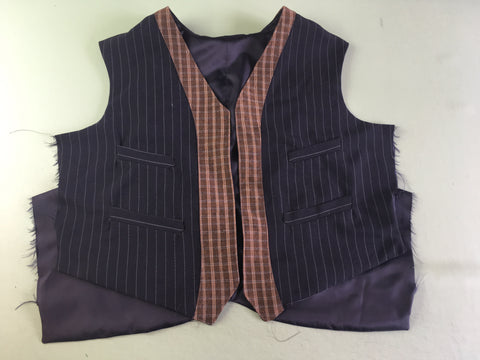
Finish the Side Seams
I started with the vest front and back outer side seams first. With right sides together, I pinned and machine stitched the vest front to the vest back at the sides seams, beginning at the boxes (at bottom side slit/vent opening) and ending the stitching 2" (5mm) past the armhole seam.

Next, I closed the lining side seams. I turned under the remaining lining seam allowances to the inside of the vest and pressed along the stitch line to create a clean edge. I worked with the right side of the side seam lining facing out, and pinned the front and back side seam lining together, matching the turned under edges and hand slip-stitched together. I made sure not to catch the side seam for the outer vest in the stitching. Because the previous machine stitching extended 2" (5mm) beyond the armhole, the amount of hand stitching is not very much.


The vest is lined!

Buttonholes & Buttons
I made the buttonholes by machine on the front as marked on the pattern, 1/4" (6mm) from the finished edge. I used 1/2" (13mm) buttons. You could also make the buttonholes by hand or change up the size and number of the buttons used. Generally, men's buttonholes should be made on the left front, women's on the right. Then I sewed on the buttons to properly align with the buttonholes.


Due to the outer facing, I preferred the way the front of the vest looks with my buttonholes on the left front side, so am breaking the "rules".
If you are new to buttonhole/button making or need a refresher, see the blogs Buttonhole 101: Part One and Buttonhole 101: Part Two.
Add the Buckle As a Final Touch
Buckle designs may vary, so have a look at the instructions for how to add them to the belt. For the buckle I used, one end of the belt is attached to the center post of the buckle, by wrapping the belt end around the center post approximately 1/2" (13mm) and stitching on the back side to hold. I chose to hand-stitch the edge, but machine stitching would work too.


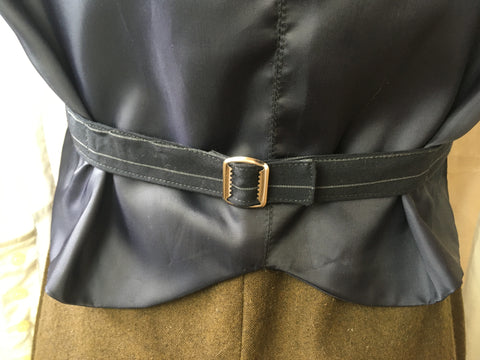
Vests are not only functional and versatile, but they are an fun way to spruce up any wardrobe. Plus, vests are a perfect fall project to practice tailoring construction techniques and skills in preparation for making a new coat or jacket. Have a look at all the Folkwear coat and jacket patterns and enjoy making a special piece for yourself or someone else. Don't forget to add a vest for extra warmth and style to whatever you make!


I love this vest and even wore it today with a coordinating grey skirt and a white buttoned shirt underneath. Perfect fall layering for the cool weather we are starting to get.


by Cynthia Anderson
Make a vest for Fall and add a bit of stylish flair to just about any outfit in your wardrobe with the 222 Vintage Vest pattern. Transform the look of jeans, skirts of any length, pants, and even dresses/tunics with a new vest. Whether worn buttoned-up or open, vests are the perfect piece to elevate a simple tee, henley, flannel shirt, crisp white blouse, or sweater. Make a vest for everyday, for a coordinated outfit, or even as a formal piece. Once you add a vest to your wardrobe it won't take long to discover what a versatile, interchangeable, comfy, and fun this piece is to make and wear. Check out these amazing creations from some of our customers.
Vests are a perfect addition to any wardrobe, especially when the temperatures drop, but when it's still not cold enough for a sweater, jacket, or coat. Then once winter truly arrives, vests create an extra layer of warmth, without adding more bulk. It is easy to spruce up your fall/winter wardrobe, with the 222 Vintage Vests pattern. The pattern is available as pdf too. Make this stylish garment for Fall and enjoy wearing throughout the cold months ahead. If you want to wear heavier layers under your vest, you might want to go up a size. Consider making vest for the first chilly days of spring as well! Or even in linen or lightweight cotton for a special summer outfit.
 View A

View B

View C
This blog post will go through the pattern details, cover fabric selection, and go over all materials needed to make a vest from this pattern. In the next blog post, I'll show you how I made my own 222 Vintage Vest.
The 222 Vintage Vest Pattern
Our 222 Vintage Vest pattern offers three Victorian Vests for women and two for men. View C is a closely fitted women's vest. All three are fully lined. The backs are cut from the lining fabric for comfort and to reduce bulk. However, you can also make the back from the main fabric as well, especially if you plan to wear the vest on it's own and not covered by a jacket or coat.
View A is a simple, collarless V-neck vest with four welt pockets and adjustable back waist belt. The center front is pointed at the bottom and raises to hip length at the side seams and back.

View B is bias-cut for a decorative fabric treatment, features a shawl collar, and ends above the hipbone with a shallow point in front. Like View A, a back waist belt adjusts to fit. This view is perfect for using a different fabric for the collar, such as velvet. You could also use a patterned or striped fabric for an interesting look with the bias cut.

View C, sized for woman only, is shorter, extending just to the waist. Four front darts fit the vest snugly to the bust. A small notched collar plunges into the double-breasted front, which closes with two rows of buttons.

The pattern also includes a traditional Bow Tie for adding the perfect finishing touch to a collared blouse or shirt. You could also add a scarf, necktie, bandanna, or make a cravat using Folkwear's free pattern.

Vests are a great project for practicing tailoring techniques, such as making welt pockets, topstitching, edge stitching, adding linings, and making buttonholes.
Fabric Selection
One of the beauties of vests is that they make up beautifully with a relative small amount of fabric. Just about any woven fabric will work and it is fun to combine fabrics using different, patterns, textures, prints, stripes, or plaids. Dig through your stash to utilize what you may already have and find a pairing of fabrics you know you already love.
The outer layer of all the vest views work best in a medium to heavy weight fabrics made of cotton, silk, wool (tweeds), linen, velvet, corduroy, canvas, pique, or synthetic suede. The bias cut of View B is especially suitable for stripes or plaids.
For all the views, use a lining made of light to medium weight lining fabric such as; (Bemberg is a good quality brand), cotton, rayon, silk (haboti), synthetics, or blends.
Hint: Feel free to make the outer front and back of the vest out of the same fabric and make the lining with a light weight fabric.
Note: When using a directional design or plaids, you may need more fabric yardage to match plaids. See how Molly matched the plaids of her vest in the blog, Vintage Vest Inspiration.
Materials Needed
To make a vest, you will need:
Feel free to change the size of the buttons you use depending on preference. But remember, if the button is sized up or down very much adjustments need to be made so the vest will fit correctly. See the blogs Buttonhole 101: Part One and Buttonhole 101: Part Two for what you need to know.
Also, the back belt and buckle can be optional. If you prefer a vest that is looser or that will be an outdoor vest, you do not need to use the belt pattern pieces or need to purchase a belt buckle.
Don't Forget the Bow Tie
For all sizes of the Bow Tie you will need 1/4 yard (23cm) of light to medium weight fabric (all widths) and the same amount of interfacing (optional).
Join me in the next sew-along blog and see how I combine different wool fabrics to make a classic everyday vest with a simple to add twist. I will show you how I make the View A of this pattern, by simply turning the facing to the outside.

Our 222 Vintage Vest pattern is a fabulous base for so many creations. It can be used to make a very current, everyday vest or a historic costume, a formal garment or an informal work garment. It can be made for men or for women. It can be made with a variety of fabrics, from wool to silk to brocades to simple cotton. And we up-sized this pattern so it now comes in sizes XS-3XL (for men and women) - and it's also available as a PDF pattern!
For a little inspiration, I am going to show you a couple of the vests that we have made for ourselves as well as vests that customers have made with this pattern. Lots of beautiful makes!

I'll start with this vest I made my late husband. This is View A from the pattern, a collarless buttoned vest with front points. The pattern calls for welt pockets, but I wanted to make a more informal, everyday-type vest. So I just added patch pockets to the front. I also lined this vest with a raw silk and used the same brown wool on the back as on the front (rather than reduce bulk with a lining fabric for the back).
 I also made a vest for myself - View A from a small piece of wool my mother brought back from England for me many years ago. I did put in the welt pockets here and they go well with the pattern. I would increase the length of the pattern for myself next time I make it, but I really like this warm layer. By the way, the jacket I'm holding is our 251 Varsity Jacket made with a woven cashmere. Both the 222 Vintage Vest pattern and 251 Varsity Jacket are made with surprisingly little fabric.
 This is a customer's version of View B of the pattern. Made with a pretty lining and with a skirt to make a whole suit.


This is @dandy.laboratory who made an gorgeous suit with our View C of this pattern. They also made pants to go with it (nice job on fitting them!). And we get to see the back as well - a beautiful habotai lining!
 Another View A vest made for a wedding by @cheval_stitching. She made it with a Robert Kaufman flannel. Looks great, and probably feels amazing (and warm!).
 This fun and gorgeous vest is View C made by @the_art_of_karro. She made it for a New Year's Eve - and it fits the theme of dazzling! She used fewer and larger buttons that the pattern calls for, which makes it looks amazing.
 Another View A with welt pockets for a more formal look. This vest was made as a Christmas present for her husband by @susanbeetonobrien.
 I absolutely adore this View C version that @republica_unicornia_yarns made. The Anne of Green Gables vibes are very strong. She also used our 209 Walking Skirt Pattern and 205 Gibson Girl Blouse pattern for this look. We love it!

 A stunning vest (View C) made by a customer of @TreadleYardGoods. She also made the blouse from our 123 Austrian Dirndl. A great combination - so pretty!
 This Steampunk version (View C) is really amazing! I love the contrasting collar. Made by @mellodytamm
 I love this fun and beautiful version (View C) by @scificheergirl. Such a great outfit! And I like how she used the directions on the plaid.
 Finally, this incredible version (View B) made by @periodwardrobe for @crowseyeproductions of their getting dressed series based on Queen Victoria and Prince Albert. Pauline does an amazing job with historic costumes and I feel honored she uses Folkwear patterns as a base for some of her creations.
.........
I hope you have found some inspiration here for making your own 222 Vintage Vest. It really is the perfect pattern for adding a layer of warmth, elegance, or ruggedness to any outfit!

by Cynthia Anderson
We are not done yet. This bat-themed costume still has a few more details that I can not wait to show you how to make. For the cloak (from our 208 Kinsale Cloak for Young Folks) go here for how I made it, and for the hat, visit this blog post to learn how to make your own!
The accessories I will be making in this blog can be adapted for all kinds of costume ideas. The wand can be for witches or wizards, fairies, or magicians. Bat hair pins can be a fun thing to wear to school on their own for a Halloween theme or add them to a costume. The neck ruff is perfect for any kind of magical or historical costume. Feel free to let these simple to make projects inspire you to make your own version. Each of the projects in this blog are perfect for little helping-hands (minus the hot glue). Include a child in making a costume or have a Halloween Costume Making Party!

The Wand
All you need to make a wand is a wooden dowel or a stick, some ribbon, and a cut out shape for the tip. Because I wanted to add a touch more color to my costume, I decided to wrap the length of the wand in seam binding dyed orange, with Ritz dye. The wand wrap you see below was made with two slightly different shades of orange seam binding. I chose seam binding because it is thin and wraps around a small dowel width without puckering.
Attach the ribbon or seam binding, to the top end of the dowel with a dab of hot glue. Begin wrapping/twisting the ribbon or seam binding down the length of the dowel, keeping the ribbons laying even and flat. Once you are satisfied with the wrap, add a touch of hot glue to hold the ribbon at the bottom of the dowel.

The star on the tip of the wand, is made from unbleached muslin with interfacing sandwiched between, stitched on the machine, and then cut out. Leave a hole in the stitching large enough to insert the dowel. In the photo below you can see the dowel inserted into the point of the star. Use a touch of hot glue to hold the dowel and the inside of the star together.
Consider adding a bow and streamers at the base of the star for a really fancy wand (perfect for a fairy wand).

Hair Pins
To add another layer of detail to the costume (or to add a little Halloween theme to an every day outfit), make hairpins. Decorate hair pins with any shape you like. Hair pins work for long and short hair, but be sure they can be seen if wearing a hat.
Depending on the type of hair, the weight of the finished pin should be considered. The decorative shape could be made of paper for a truly light-weight version. When it comes to hair pin hardware, try to find the "pinch-open" hair pins/clips. They are easier to apply and remove from hair. I used regular bobby pins, because I had them on hand and my model has lovely heavy hair that can support a bit of extra weight.
For easy assembly, slip the pin over the edge of a piece of cardboard to help stabilize the pin while you work. Apply a dot or two of glue to the center of the pin. Then center or position the bat or other shape how you like.
Don't add too much glue, just a dab will do. You can always go back and add a bit more.
Tip: Hot glue or Super Glue works well when using metal. Regular white glue does not hold as well. Be sure that all glue used has set or dried before adding to hair.


Quickly remove the bat pin from the cardboard and separate the pin opening with your fingers. This will ensure the pin does not glue shut. Hold the pin open with your fingers for a few seconds until the hot glue cools and sets.


Make lots of bats in different sizes for a dramatic look.


The Ruff
Gathered ruffs are perfect for a simple but dramatic neck detail. They are easy to make and ideal for using scraps of fabric, ribbon and trims of all kinds. Just be sure there is enough width and length for the desired effect. Light-weight fabrics typically work best, because of the tight gathering. The amount of fabric needed depends on the circumference of the neck measurement, the desired fullness of the gathers, and the width of the ruff.
Because I tried to limit and make the most of the fabrics used in this project, I made the ruff out of the muslin I lined the cape with. Use whatever you have on hand or when planning, reserve enough yardage to make a ruff.
I started with a length of muslin measuring 4.5" (11cm) wide by 45"(114cm) long. I left the edges raw, but you could finish them with a rolled hem, serged edge, zig-zag edge, turned hem, or bound hem, depending on the material and look you want.

Make a row of gathering stitches on either side of the center of the length.


Pull the bottom gathering thread, being careful not to break the thread. Make the gather as tight or lose as preferred and will fit around the neck.

Once you are satisfied with the gather and final length, tie off the gathering threads a few times on each end and trim the excess treads tails.

Cut two lengths of ribbon or seam binding long enough to tie a bow. Fold under the raw edge of the ribbon or seam binding and add to the center edge of each end. Position in from the edge approximately 1" (2.5cm) and stitch directly over the center of the gathering stitches to secure. Tie the bow at the front or back of the neck, depending on the look you like.


I hope you enjoyed making all these quick and easy excuses to have fun. Homemade stuff simply adds to making Halloween special. If you are inspired to make a Halloween costume using a Folkwear Pattern, we would love to see all your creative ideas.
Happy Halloween!


by Cynthia Anderson
Halloween is the perfect excuse to get creative and have fun making a costume, especially for a child. In the previous blog Make a Child's Halloween Costume with the 208 Kinsale Cloak for Young Folk, I made a cape as a simple foundation for bat-themed witch/wizard costume. While the cape was lots of fun to make, it was just the beginning and an excuse to make more Halloween stuff. In this blog, I will show you how to make a Harry Potter-inspired witch/wizard hat. How to make a ruff, bat hair pins, and wand is soon to follow!


Materials Needed:
Measurements Needed
Note the measurements you need down on some paper before you start. First measure the forehead circumference using a fabric measuring tape. Measure the head placing the measuring tape above the eyebrows and ears. Add 1/2" (13mm) to 1" (2.5cm) of ease to the circumference, depending on how high or low you want the hat to sit.
My circumference is 19 1/2" (50cm) + 1/2" (13mm) of ease = 20"( 51cm) total head circumference
Next, decide the width of the brim. This will also be the width of the hat. My brim diameter is 14" (36cm) . It can be any width you like.
Make the Brim Pattern
First, determine the head diameter (hat opening) using this formula: total head circumference /divide by pi (3.14159) = head diameter
For my hat:
20" (51cm) / 3.14 = 6.4" (16cm). For ease of measuring the pattern, I decided to round to the nearest 1/8" (3mm) which is 6.5" (16.5cm), which is close enough. My head diameter is 6.5" (16.5cm).
Make a center point on a large piece of paper or Swedish tracing paper. Then draw a circle for the head diameter based on your measurement. Then draw another circle outside the head diameter circle, measuring 3" from the head diameter circle (or whatever brim size you choose). The head diameter circle is centered in the width of the brim circle. Cut this pattern out, including the hat opening.

Try the paper pattern on for size and evaluate if the brim width is how you want it. But, before you cut the fabric opening for the head, consider how stiff or floppy you want the brim to be.

To create just the right amount of brim flop, I am using two layers of felt. If you prefer an even more ridged brim, sandwich a stiff layer of interfacing or fabric between the two layers. I determined one layer to be much too floppy.
To give the brim more structure I decided to stitch the two layers together with a circular free-hand stitch on the sewing machine using black thread. The stitching adds a quilted design aesthetic as well adding extra heft. I used pins to help keep the layers from shifting while stitching. It is easier to maneuver when stitching if the head opening has not been cut out yet.


Make the Cone Pattern
First, decide on the height of the hat.
My hat is 11" (20cm) tall.
Draw a horizontal line that measures the head diameter, then mark the center point.
From the center point draw a vertical line to the hat height.
Connect the vertical height point to the horizontal head diameter width.


Use the triangle template and trace it again twice more as shown.

Draw a curve to smooth out the bottom edge of the cone shape.

Be sure to add the seam allowance to each straight edge of the pattern. I am using a 1/4" (6mm) seam allowance. Cut out and use as a pattern for the hat cone.


Using the cone pattern, check to be sure it fits and be sure it fits into the head opening of the brim. Make adjustments if needed.
With right sides together pin and stitch the seam allowance.

Assemble the Hat
With right sides together match and pin the edges of the hat opening and the bottom cone edge, stitch on the seam allowance. I used 1/4" (6mm) seam allowance.


Clip the point of the cone to make turning right side out easier and for inserting the top wire detail.

With the wrong side still facing out, add a pipe cleaner along the seam stitching, using hot glue to tack it down. This will make a hat that can be bent and shaped. Only attach the pipe cleaner to the narrowest point of the cone shape first. This will help to make turning much easier. Once the cone is turned, then finish gluing the pipe cleaner in place.


Add the Finishing Touches

The hat's whimsical top detail, is made of stars, a crest-moon shape, and felt bats danging from wire. Cut the star and crest-moon shapes out of two layers of unbleached cotton muslin, with interfacing sandwiched between, and machine stitch the shapes with black thread. Leave a small hole in the stitching, in which to insert a length of 26 gauge wire. Use a dab of hot glue to seal the hole opening.


For the bats, use the same template used on the cape, but scale them down to be much smaller. Cut them out of a single layer of felt and attach a length of wire as well.
Arrange the shapes to the desired length and twist the wires together to make a bouquet. Apply a small amount of hot glue to the end of the twisted wires and wrap with masking tape before the glue sets.
Insert the wire bouquet into the tip of the hat and add a bit more hot glue from the inside the hat to secure the hold.

In the next blog the fun continues - learn how to make a simple ruff, wand, and hair pin decorations that you can copy or customize for your own inspired Halloween costume.


by Cynthia Anderson
Fall coming and it’s time to get started making a Halloween costume! Lots of Folkwear patterns can be used for costume making for big and little Halloween fans alike. Have a look at Folkwear’s Pattern Collection and get inspired to make your best Halloween costume ever! Also check out Victoria's blog (and some past ones here for some adult costume inspiration).
However, this year we wanted to inspire you with some great kids' costume patterns (plus they are on a huge sale for the next two weeks). I decided to take the 208 Kinsale Cloak for Young Folks and make a relatively simple costume, but have fun adding creative details. My plan was to start with a cape and add other detailed accessories to make a truly fun and unique costume. The 207 Kinsale Cloak and 208 Kinsale Cloak for Young Folks hold lots of possibilities for this approach.
To see how I made the hat for this costume, and how you can make one yourself, go here. For the accessories I made, go here and learn how to make them yourself!
Pattern Info and Fabric Suggestions
Both the adult and child versions of are fully lined and hand-gathered into a wide collar, falling in small unpressed pleats to a curved hem. The cloak fastens at the neck with a large hook and eye, and offers an optional detachable hood that buttons to the cloak under the collar. It may be worn loosely over the head or down over the shoulders as an over-cape. Both versions of the cloak can be unisex. You could make matching Halloween capes and enjoy trick-or-treating with a child.
When it comes to capes, any fabrics and trims you would normally sew with will work. However, costumes are a good excuse to have fun and try other types of materials and combinations. Consider using cotton, linen, canvas, corduroy, denim, wool, velvet, heavyweight silk, felt, faux fur, microfiber, burlap, polar fleece, upholstery fabric, or something in your stash. For the lining, use a lighter weight fabric such as cotton, satin, polyester, rayon, silk, or linen. Of course, you can eliminate the lining, but don’t. Linings are great excuse to get creative. Have a look at the fabric suggestions blog for the 207 Kinsale Cloak and the 208 Kinsale Cloak for Young Folks for more ideas. And, this time of year craft stores are full of fun fabrics perfect for Halloween making - there's lots to get excited about.
Don't forget the trim. Pull out your trim collection to add another layer of creative details with ribbon, rick-rack, braid, embroidered patches, beads, etc. You could even make your own ruching (check out the blog How to Make Authentic Ruching Trim to learn how to make your own). Using fabric paint or acrylic paint is also a great idea. Dig through your craft supplies and have fun.
Besides being simple to make, fit is not a crucial aspect of capes - and can be made any length. All of which makes them not only versatile, but also provides the perfect jumping off point for making all kinds of easy to put together costumes. Magicians, ringmasters, Red Riding Hoods, Harry Potter, superheroes, queens, kings, princesses, princes, detectives, Victorian characters, vampires, witches, devils, wizards, knights, stage coach drivers, sorcerers, spooks all wear capes. Even Elvis wore a cape.
I used the 208 Kinsale Cloak for Young Folks, which comes in sizes 2 thru 12, as the foundation of a unisex witch (or wizard) costume. I compared the length measurement of the pattern to the height of the child I made the cape for to determine which size to use.
To keep things really simple and unisex I made the cloak with just the collar, using black quilting cotton and a unbleached cotton muslin for the lining. I took this approach so the cape can be reused for different themed costumes for future Halloweens. Or it can be relegated to a costume play box for continued enjoyment throughout the year. For this Halloween, I made a bat-theme cloak costume complete with a traditional felt witch/wizard hat, wand, neck ruff, and lots of spooky bats attached to the cape.
FYI: My first idea was to add appliqué stars, crest-moons, and bat shapes cut out of unbleached muslin and stitch them to outside of the black fabric cape using machine black stitching. This simple application would happily result in black stitched shapes on the inside lining as well. I abandoned this idea once the cape was constructed, because I realized the shapes would get lost in the drape of the fabric. It is good to have a plan B.
Making the Cloak
Be sure to launder your fabric, and make sure the yardage is square if needed. Then make the cape/cloak according to the easy-to-follow pattern instructions. I made a Size 4 and shortened it by approximately six-inches to ensure it won’t cause my wearer to trip. Make your cape any length you choose.
Once you have the cape made, treat it like a canvas and have fun decorating it with fabric, paint, or any variety of craft materials. If you are making the costume for a child that is old enough help, invite them to join in and make your own Halloween memories together!
Have look at the internet for free templates of shapes and designs to use or draw/trace your own. To save time and effort I downloaded a couple of bat shape designs and printed them out in different sizes. I cut out the paper templates to use as a pattern. Then I pinned the pattern to the felt and cut out the bat shapes. Halloween cookie cutters make great tracing templates too.

Note: I was able to find felt in a couple different weights at my local fabric store. Thicker weight felt is typically sold by the yard and is nice because it makes larger projects or details less flimsy than the thinner weight of felt typically sold in squares. Inspect your felt to determine if the right and wrong side are noticeable. Thinner felt always works well for small details.
I cut the bats used on the cape in pairs because I wanted more thickness so the wings would stand up and not flop. The felt was easy to cut two layers at a time for the larger bats, but I resorted to cutting the smaller bats out one layer at a time.

To give the bats even more shape I taped a thin length of black 26 gauge wire to the wrong side of each of the felt bats. I bent the wire to more-or-less fit the contour of the center of the bat shape. I used little bits of masking tape to hold the wire in place.
Note: A slightly heavier gauge wire would have been better, but I used what I had on hand.


I placed the bat pairs wrong sides together, matching the edges as well as possible. And then I glued the two bats together starting in the center.
I prefer to use a small hot glue gun purchased at the craft store for adhering paper and fabric details like this, because you can work quickly.

If doing something similar, keep working/gluing on either side of the center of the bat one wing section at a time. Don’t apply the glue too thickly or too close to the edge of the felt. If using regular white glue, follow the same technique to ensure to keep your work neat.

Gently press the pieces together and set them aside until the glue is dry or set. Hand stitching or machine stitching works as well, it just takes longer.


With all the bats made, I arranged and pined them on the cape while on a dress form. To better emulate the slight shoulders of a child I pressed in the retractable shoulders. This helped with the placement of the bats.


Once I was satisfied with the bat placement, I made a few hand stitches to secure them in place. When all the bats were attached I tweaked their angle placement with a few more hand whip-stitches just to insure they would remain just so.
To hold the cape closed, I secured the front neck opening using a larger hook and eye. Lastly, I stitched the center of a bat to the neck front edge of the cape for a final touch.


Not only was the cape fun to make, but I still had plenty of time to make the hat, ruff, hair pins, and wand. I will show how to make all these accessories in the next couple of blog posts, so be sure to check back to see how to make all the other pieces for this fun and easy Halloween costume.
Remember that one of the charms of Halloween is the fun of making a homemade costume!


by Victoria Watkins
This time of the year is always so exciting for me. While it's not for everybody, Halloween is probably my favorite holiday. For that reason, I was excited to have the chance to come up with ideas for how we can modify our children's patterns into Halloween costumes.
Of all the possibilities, I settled on turning our 213 Child's Prairie Dress and Pinafore into a witch's dress and apron (NOTE: pattern deeply discounted this month). The two garments together can be used to contrast a black fabric with a novelty Halloween print quilting cotton, as I've done here. When making selections at our local fabric store, this purple bat motif was what spoke to me the most. There are always countless seasonal quilting cottons available at both mom-and-pop and chain stores, so you're sure to find something that you can use for this costume.
I made a couple considerations when choosing elements for this project. The first is that this pattern has an option for a shorter length and a longer one. I chose the shorter version. This was mainly due to personal preference, but in retrospect I think it works great because it allows room to show off the classic witchy striped socks, if you choose to include them. The pinafore also has an option to be closed or open in the back, and I chose to keep it open for a more apron-like effect. I also chose to omit the cuffs on the sleeves, which left them open and bell-shaped, which felt more magical to me.
If I'm honest, while working I didn't feel like switching the thread from black for the dress to a purple for the apron. There are areas of topstitching on the pleats, and I'm actually pretty pleased with how the contrasting thread looks on these spots! Had I sewed this a year prior, I'm sure my finishing would've been a little more off kilter, and I'd probably have wanted a purple thread to melt into that fabric...

Here is Miss Iris, kindly modeling the dress and apron for us. She loved it and twirled around quite a bit, showing it off. She also really liked having a wand, and it could definitely fit into a Harry Potter themed costume as well.


 The all black dress is also great for a witch or wizard. Lots of magic!

In the past, we have suggested some patterns for Halloween costumes, and we thought we would do this again this year. Especially since we are having a HUGE sale on some of our children's patterns which could be used to make some fun (and beautiful) costumes for little ones in your life. The sale will go for the rest of the month! Below you will find some patterns and ideas for making memorable costumes - ranging from simple to involved.
Cynthia and Victoria also made some great kids costumes that we will feature on the blog - along with some free instructions for making accessories. Check out our past suggestions here and here. As always, we expect you will use our patterns with respect. Quite a few of our patterns are from specific cultures, and it would be disrespectful to wear them as a Halloween costume.
Children's Costume Ideas:
110 Little Kittel. Make an adorable Gretel from Hansel and Gretel - add some embroidery and/or a hat/bonnet and a basket with bread crumbs to accessorize. Or use black fabric to make an easy and comfortable witch's dress.
138 Child's Drovers Coat. Make this coat in a tan canvas or heavy twill and it can be used for an outlaw costume, Western sheriff, or a cowboy costume - with cowboy hat, bandana, and boots. Add the 218 Child's Frontier Shirt for a great Western look.


208 Kinsale Cloak for Young Folks. Could be made into a Witch or Wizards cloak, Little Red Riding Hood, or Count Dracula without the hood. Also great for Harry Potter character costumes. It would also be great as a Elvish Cloak given to the Hobbits in Lord of the Rings.

213 Child's Prairie Dress and Pinafore. This one makes an adorable Little House on the Prairie look, of course - complete with the bonnet (in the pattern). But you could also make a great witch's outfit with some black fabric (and creative fabric) - check out what Victoria made in the next couple of days on the blog. You could also make a very cute Heidi or Alice in Wonderland outfit as well (blue fabric, white pinafore). Even Mary Had a Little Lamb would be great, include a wooden walking stick and a stuffed toy lamb as a prop.
218 Child's Frontier Shirt. Perfect for a Sheriff Woody costume from Toy Story or a cowboy complete with chaps, bandana, boots, and a hat. Also a great shirt for a pirate with an eye patch, felt tricorn hat, and don't forget the faux parrot attached to one shoulder. With a the right shade of green fabric, this shirt would be a great jumping off point for a Peter Pan costume. Add a green felt pointed apron-like waist wrap and some green tights and your ready to take flight. Great for a Three Musketeers costume too.

225 Childhood Dreams. Make a dress inspired by Wendy from Peter Pan. The 223 A Lady's Chemise could be inspired by Wendy as well for adults. With the right fabric, the Childhood Dreams dress could also be used to make a princess dress - think shimmery fabric, tulle, etc. Or use it to make a Clara from the Nutcracker.
256 At the Hop. For a very cute sock hop costume.

For Adults:
207 Kinsale Cloak. Again, perfect for characters from Harry Potter, Lord of the Rings, or even Little Red Riding Hood.

215 Empire's Dress. Shows like the new House of the Dragon, Bridgerton, and the new Persuasion include costumes like the Empire Dress. Dress up as your favorite character or best Jane Austin. Add an English accent to your gab and you'll fit the part.

256 At The Hop. Make a quick and easy felt circle skirt for a Grease or Happy Days themed costume complete with poodle applique, saddle shoes and bobby socks, and a cardigan sweater for a little Jitter Bug. This one could be for children too.

We've been enjoying shows like Hotel Portofino, Downton Abbey, and the Durrells in Corfu (as well as the new Downton Abbey movie). The 249 1930s Day Dress, 1920s flapper dress, 220 Garden Party Dress, 237 Tango Dress, or 233 Glamour Girl Dress would all make fun garments to wear to dress up as a character from these shows. The flapper dress and 233 Glamour Girl Dress are particularly easy and quick to sew. Grab some fun, sparkly fabric from Joanns for the flapper dress - it doesn't take a lot.


by Esi Hutchinson
You can never have enough pillows can you? I showed you how I made a Makura pillow from 305 A Japanese Interior, and this blog post will focus on the Zabuton. Victoria made a beautiful Zabuton, or floor cushion, and shows her process in this blog post. I am making basically the same pillow (there are 3 options for the cover in this pattern), but using fabric scraps for stuffing the pillow. This is probably the most simple pillow in this pattern. The cover can be made to be removable so it can be easily washed when dirtied. And if you are going to use a poly-fil or fabric scraps to stuff your pillow (which I will be doing), you would have to make a separate cover that is non-removable to hold the loose stuffing of any kind. The filling that the pattern calls for (layers of batting), make it easier to remove and wash the cover.
If you want to make a separate removable cover repeat instructions for Cover #1, adding an extra 1 in. (2.5cm) seam allowance at one edge of both top and bottom pieces. Turn this inch under as a facing, then topstitch. Add several snaps so that this final edge overlaps by ½ in. (13mm). A cheap muslin would be fine to make the inside cover and hold the fill.

However, I am just going to make this pillow with one cover. It will be just a display pillow so I am not worried that I will need to wash the cover.
Since you know, as a sewist, fabric scraps build up. Often they are small pieces that you might save thinking, "this is too large to throw away" or "this fabric is so nice, I can't throw it away" or "maybe I can make a pocket from this scrap in some other project". Or maybe you have scraps you test stitches or buttonholes or muslins on. Either way, we always end up with loads of scraps of fabric. We at Folkwear, don't like to throw them out, but sometimes it is hard to find uses for them. Filling pillows is a perfect option, especially if the pillow needs to be quite firm. I wanted to show you how I made this pillow and filled it with fabric scraps (and reduced our scrap pile), so you might be inspired to do the same!
I found these scraps to work with in our fabric scrap pile.

To make an even surface for my pillow, I cut about 5 layers of fabric the size of the pillow batting. I used some of Folkwear's larger pieces of muslin that could not be used for other prototypes - even cutting up some of the old garment muslins we had made. Having these smooth layers of fabric to sandwich the rest of the scraps helps to keep the pillow without bunched fabric which can easily make the pillow feel uneven. Cut as many layers as you like for this "sandwich".

Then, I took the smaller fabric scraps and laid them in between the larger layers of fabric. Trying to make it feel plush and even and and not flat.


I sewed one edge of the two of the two layers to sandwich the scraps together in order to hold everything together more easily when inserting the stuffing in the cover.

Layers of scrap fabric (the size of Zabuton batting) sewn together at one end.

The scrap fabric batting is finished and ready to but inserted in the cover (it almost looks more like a taco than sandwich). Now you can make the cover!
Cover
This is the simplest cover. Just follow directions in the pattern. I used a gorgeous cotton ikat that we have in stock here at Folkwear.

Like Victoria, I found it difficult to insert the batting I'd made with the technique used in the pattern. So I just left open one side of the pillow and inserted the "batting" gently, adjusting as needed to fill the pillow with the scraps. I added more scraps to the pillow after getting the "batting" inside the cover, again adjusting to make everything even. Then I just slip stitched the opening closed with a 1/2" (13mm) seam allowance turned to the inside.
Note that if the pillow is not fully stuffed with fabric scraps, the scraps will tend to shift around with use. You can try to fill the pillow very full, or you could be sure it is not in heavy use. Or, you could add the center stitching to be more authentic and would help prevent fabric shifting.


This is a very simple pillow, and a good way to use your fabric waste rather than throwing it away. Here at Folkwear we try our best to not be wasteful. We hope you are inspired to make something to use up your fabric scraps! The pattern 305 A Japanese Interior will be on sale all month. Use it to make your own beautiful pillows (and use up fabric scraps)!


by Esi Hutchinson
Even though most of our patterns are for clothing, I love that Folkwear, also has some patterns for traditional interior accessories. The 305 A Japanese Interior pattern covers twelve different items for a traditional Japanese room but can be used in a distinctive living space anywhere. There are pillows as well as well as covers for pillows, mats, a sleeping kimono, and a set of curtains (noren). I think it is really neat Folkwear has a pattern such as this one, to a handmake a comfortable space for you, family, or friends.
The 305 A Japanese Interior pattern has two patterns and instructions for two head pillows, or makura. Pillow #1 is quite simple, so I wanted to make pillow #2. This blog post will focus on the Makura pillow #2 and cover - a sew along with some sewing tips. It is an oblong pillow with a cover that can easily be removed so it can be washed or changed out. Just to get a sense of the size of this pillow, it is a small pillow, nice for the back of the neck or for your lower back. It is about 11"/28cm long and 15"/38cm in diameter. if you want it larger use your best judgement for adjustments for the pillow and cover.
I used the same fabric for the pillow and cover, but you could choose separate, coordinating fabrics. I chose a mid-weight cotton with a plaid-like pattern.
Pillow
You only need a few pattern pieces for this pillow.

I gathered the long edges of the main pattern piece.
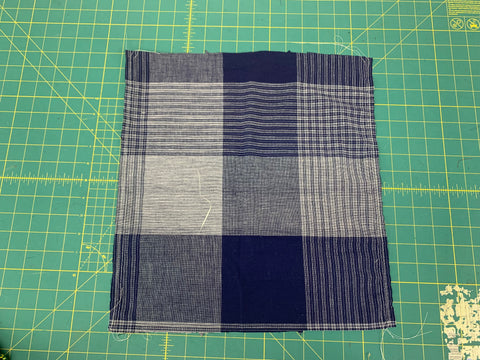
Then, fold the pillow piece in half lengthwise, right sides together and stitch along short sides, locking off at notches and leaving open between notches for turning. Press seam open.

Pull up gathering stitches of both ends very tightly and tie off. Then using the excess thread from gathering, stitch through the gathered section for added security.

Now just turn the pillow right side out through opening in seam. Insert batting to desired firmness. You can also use your leftover scraps of fabric (really great for upcycling all those small bits of fabric) which will make it feel a lot firmer. A firmer pillow is more traditional. Then after you've filled your pillow, blind stitch opening closed.


Cover for Makura Pillow #2
The cover for this pillow has a ruffle, but this is a Western-influenced style. If you would like a more simple, or traditional, cover, just omit the ruffle.
To make the ruffle, press under ¼"/6mm, then another ¼"/6mm on both short ends and unnotched long edge of Ruffle. Topstitch close to fold.

Then, put in two rows gathering stitches along Gathering Lines on notched edge of ruffle.
On both short edges of Cover, turn under ¼"/6mm, then another ¼"/6mm. Top stitch close to fold.

Right sides together, line up seam allowances of Ruffle to long edge of Cover, aligning hemmed edges and notch 2. Pull up gathers to evenly distribute fullness.
Stitch along ½"/13mm seam allowance. Trim the seam allowances and serge or bind them your choice. I serged the edge because it is easier and quicker, but choose the finish you prefer.

If you are not making the Ruffle: On all four edges of COVER L, turn under ¼ in.(6mm), then another ¼ in. (6mm). Topstitch close to fold.
Ties
To make the ties, fold the Tie in half lengthwise, right side in. Using ¼"/6mm seam allowance, stitch along long edge.

Using a safety pin or a loop turner, turn Tie right side out. Cut each tie into three equal lengths. Turn ¼"/6mm of cut ends of Tie to the inside. Topstitch ends closed.

Line up three Ties with stars, extending Ties about ½"/13mm under hemmed edge of Cover. Topstitch in place, following previous stitching line.

Place other three TIES on dotted squares, stitch in place following squares.

To use the cover, center it on the pillow and knot the ties around the pillow.
You are finished, enjoy!
Folkwear would love to see your example of any of the 305 interior items. I may make a couple of pillows as gifts. Also check out the the sashiko quilting and shibori dyeing techniques included in this pattern. They are quite interesting as embellishments in general.


By Victoria Watkins
In light of the PDF release of our 305 Japanese interior pattern this month, I have put together a mini sew-along to talk about the process of making one of the zabuton cushions. This pattern features a ton of different interior pieces, though most are bedding. I chose to make myself the second zabuton option in this pattern, as I do enjoy sitting on the floor from time to time. In addition to this I knew that my cats would love the wide pillow, so I decided to make this floor cushion and cat bed combo!


