
-
Sewing Patterns
-
Fabric
- Sewing Supplies
- About
- Blog
- Gallery
-

by Victoria Watkins
When I was developing the cover illustrations for our Basics line, I tried on a sample of each and took a photo of myself wearing them to have a reference to draw from. When it came time to document our tunic, I was enamored with the fit and drape. As such, I was thrilled when Molly asked me to do a sew-along with our tunic pattern with permission to keep the end result for myself.
If you've read any of my fabric suggestion blogs before, you might've noticed that I always want to sneak in a playful, bold fabric. I am a fiend for a loud print, so when I saw this exciting cotton voile from Mood Fabrics, I knew it was perfect for this project. In my view, something airy with a gentle drape would be elegant with this pattern.
Cutting out the pattern:
This pattern only has three pattern pieces - the front/back and the facings. All are cut on the fold of fabric. You should choose a fabric that is wide enough to fit the size you need.
I tend to trace the pattern with tailor chalk onto the fabric before cutting it out. This allows me to see the fabric and the print when I am cutting without paper being in the way.
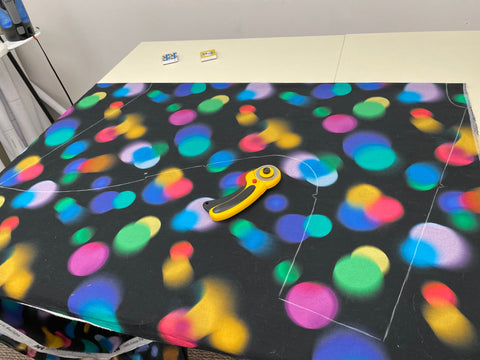
One trick I've picked up since I've started sewing more often is my way of marking notches in the cut fabric pieces. Before, I'd cut the notches outward as little triangles just like the pattern pieces, but now I make a small snip within the seam allowance to mark my notch. I find this so much easier to do, though it does take a keen eye to keep track of them all! And it may not be the best choice for certain fabrics.


 Applying interfacing to the facings.
Clipping the seam/hem allowance so I could turn the edges.
Once that's done, it's time to sew the facing to the neck. First, I sewed around the curve of the neck, then sewed the back facing along the slit with the guidelines which I sewed earlier. Once that's done, I slashed along the slash line as marked in the pattern, and then trimmed the seams and cut into the corners of the bottom of the slit carefully but thoroughly so it would sit nicely when flipped around. I pressed carefully and well after flipping the facing to the wrong side. You could understitch the facing at this point as well. That will help keep the facing to the inside of the tunic.


I'm very pleased with the finished product, and I'm very grateful to get to keep it for myself. I think it's one example of how fabric choice can really elevate these simple patterns!


by Esi Hutchinson
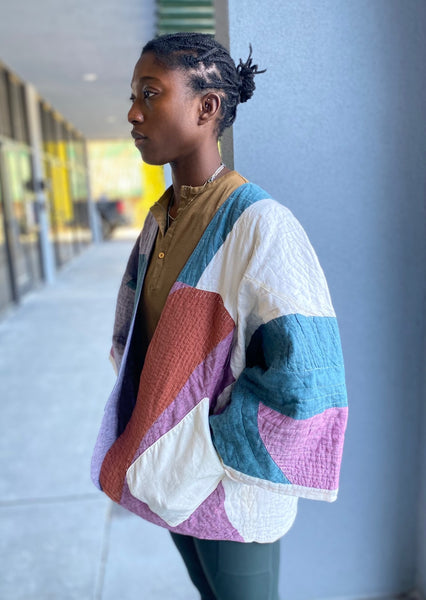
Hello! Today I will be showing everyone how I made a quilted jacket from the Basic Jacket pattern using an arbitrary patchwork assembling process, similar to Crazy Quilting.
I was inspired to do this by the quilted jackets that went into our inspiration post, as well as all the gorgeous scraps of linens we had laying around (we have most of these linens in stock here), as well as crazy quilts that I'd seen in the past. Here is a linked video about Crazy Quilting. The Crazy Quilt - The Ultimate Stash Buster! - YouTube
This was my first time quilting a garment, so I will give a few tips on what worked and did not work for my personal process. Making a patchwork garment is a great way to use the scraps that you haven't wanted to throw away of your main fabric, and with this project you can do the outer and possibly the lining if you have enough scraps.
I have selected most of the linen scraps that Folkwear had left over from previous projects and started to cut them up into large shapes with straight edges. You may cut them into whatever size and shape you wish, or cut them into equal sizes and shapes to make the patchwork process more straight forward.
This is how I started. I just cut straight edges on the scraps and started to sew them together to make a large piece of fabric that I could cut the pattern from.


It is helpful to press after you have sewn each piece together. Either pressing the seams open or pressing them to one side. Don't worry about finishing the raw edges, because you will be quilting all three layers of fabric together encasing each edge. And, the jacket has a lining so you won't see the inside.


Every now and then I placed the pattern piece on the patchwork cloth I was assembling to make sure it would be big enough.

Sometime later I came out with this.

Make sure to press the patchwork fabric well before cutting out the pattern from it. It's important that the pattern pieces are cut out to be the same size before your start to sew the jacket together. This will prevent a headache when sewing the jacket together as well as bunching when quilting the jacket.
I cut out my pieces for the Outer Layer from the patchwork above. I serged the edges around the pattern pieces, but depending how sturdy your fabric is you may not need to finish the edges. For fabric edges that are on the bias or loosely woven fabrics, it may be best to just staystitch the edges of the pattern pieces, especially around the curves. Actually, it would probably be best to staystitch all the edges of the pattern pieces before finishing them.


Now that the outer layer is done, it's time to cut the lining and inside batting. For this jacket, I used a white flannel for a lightweight layer.
If you'd like, you can use the same patchwork process for the Lining that you used for the Outer Layer, if there are enough scraps. I had large enough pieces in two different colors that worked for the Lining.


Flannel cut from the same pattern piece as the jacket.

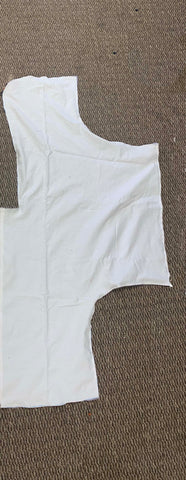
Now that the front and back pieces are all cut, check again if they are all the same size, and trim edges if needed.
I then followed the instructions from the pattern: With right sides together, sew outer Front/Back pieces together at center back seam. Press seam open. Repeat with lining and with flannel (batting).
Then, I basted the raw edges of lining to the flannel wrong sides together, making it one piece.

With right sides together, I stitched the Front to Back outer layer at underarm/side seams; trimmed and clipped seam allowances, and pressed seams open. I repeated this with the lining/flannel layer.

Decide where to place the pockets. You can place them as indicated in the pattern, or angled up further from the original placement lines indicated. I angled the pockets up a little bit, then topstitched the pockets to the outer layer of fabric. I decided to use one solid color for my pockets, I thought it would be a nice contrast. If you want to quilt the whole jacket (i.e. also under the pockets), you will need to add the pockets after the jacket is finished and hand-stitch the pockets to the jacket.

I put together all layers of the Jacket as instructed.
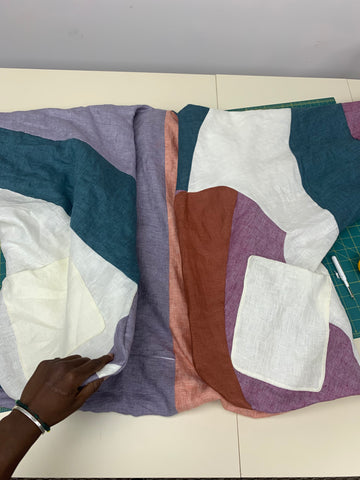
If you wish to not stitch along neckline and hem edges as indicated in STEP THREE of the instructions, just layer the fabrics as they would be in a finished jacket. You can baste the layers together to prevent shifting and then trim any excess fabric from the edges when you are finished. However, you will have to bind the neckline and hem edges. You can use bias tape to finish the edges.
Quilting Time!
I practiced stitching on a separate piece I made similar to the Jacket to get a sense of the thickness I would be working with and whether or not to change the tension and the length of the stitch. Troubleshoot with your sewing machine to see what length and tension works best with your fabric thickness. I used the stitch length 3 so it would not be too tight and easier for me to take out stitches if I made a mistake.

 Practicing on more scraps
Now starting to stitch onto the Jacket. I bascially decided to give each scrap section its own stitching design.


Drawing onto the fabric is helpful, it makes the planning process easier. Use a fabric marker, Crayola markers are washable.


This is what the inside looks like so far.

Planning the lines for the back of the Jacket.

 Almost done!

I am finished quilting the Jacket, and used the same color for the cuffs to match the pockets. The cuffs neatly and easily bind the sleeves. This is basically the same method you would use to bind the front, neck, and hem of the jacket if you stacked the layers.
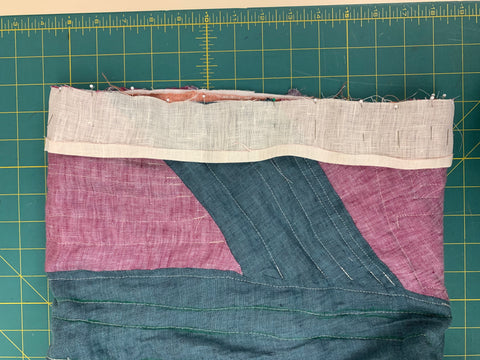
My only other advise would be to baste the layers together a bit more than I did to avoid shifting fabric. I enjoyed this project (such beautiful linens!), and I hope you are inspired to try something like this yourself!
Here is the final product! Thank you! Check out the pattern here, and try it yourself!


The patterns in our Basics Collection are perfect as a base for creativity - from fabric selection to embellishments to styling - these patterns can take you in many directions. Today I am going to share a few ideas for creating and styling the Jacket and Tunic. And check out our Pinterest inspiration board for more ideas and to get your imagination working while thinking about what you want to make with these patterns.
Jacket
The Basics Jacket is short and boxy, has wide built-on sleeves, and is fully lined. The front and back are sewn as one piece, with a back seam, and there are pockets!
First, if your fabric has a large print or stripes/plaids, etc., you don't necessarily have to have the back seam. You can cut the front/back as one piece by placing the pattern piece on the fold (taking out the 1/2"/13mm seam allowance). Just make sure your fabric is wide enough to do this.
Fabric choice is another consideration for making this jacket. You can make this jacket out of everything from heavy-weight denim to light-weight silk chiffon. Medium to heavy weight fabrics, or fabric without a lot of drape, will give you a boxier look, a more utilitarian jacket (good for outerwear, work, etc.), and will potentially be warmer. Fabric with drape and lightweight fabrics will be perfect for warm weather, making a cover up, or as a daily-wear jacket.
For one of our samples, we made the Basics Jacket from a kantha cloth, lining it with muslin (cause kantha can be expensive to use for both outer and lining) and using the back-side of the kantha for the pockets. For a heavier jacket, lining with another section (or back-side) of kantha would be warm, cozy, and beautiful.



This jacket is also perfect for quilting. The two layers (with or without a layer or batting in between) make it a great choice for adding the interest and warmth of extra stitching for loft. Make it in solid colors or patchwork. Either would be beautiful. We saw several quilted jackets that inspired Esi to make one from linen scraps we had left over from other projects. She will have a blog post soon about how she made her quilted jacket. Check out the inspiration (Pinterest links) below and Esi's jacket.
 Pinterest link (Eileen Fisher).
 Pinterest link (Anthropologie).
Esi's quilted Basics Jacket
Finally, because this jacket is fully lined, it is very easy to make a reversible jacket. Esi has a blog post about how she made the jacket reversible using two beautiful organic linens.


Hello, my name is Esi, and I am a Creative Assistant at Folkwear. Today I will be starting a new sew along for making a reversible Jacket using the pattern from the new Folkwear Basics Collection. The great thing about the Basic patterns is that it allows and encourages personal creativity through different embellishment techniques, embroidering, bead work or painting. One could even quilt themselves a Jacket from this pattern (hint: I'll be doing that in another blog next month!). However, this sew along will be more basic with a little twist by making the Jacket reversible. The Basics Jacket comes in sizes XS-3XL - the sizing and finished measurements are stated in the pattern.
Choosing Fabric
First, I selected a fabric that would keep the jacket light and breezy. I used a coral and and off-white linen - one for the outer layer, one for the inner layer. You can choose any fabric that is medium to light weight for this jacket. Even heavier weight fabrics like bottom weight wools or denim would be fine. Since the jacket is seamed around the edges, the bulk can be an issue if the fabric is too heavy. For a reversible jacket, the outer layer and inner layer should be about the same (or the same) weight. If you are making a regular jacket (i.e. not reversible), then you could use a lighter weight fabric for the inner layer. It would be best that the inner layer fabric is the same weight or lighter weight than the outer layer.
Cutting Out the Pattern and Fabric
For the reversible jacket, cut out all of the pattern pieces except for the cuffs in each of the two different colors you have chosen.
You will also need to cut out an extra set of pockets so you will have one set on the inside and one set on the outside of the reversible jacket. You will need to cut 8 pocket pieces rather than just 4. You can cut pocket inside and outside pieces from the same fabric or from different fabric.
For the Cuffs, we will be using half of the original Cuff C and adding a 1/2" (13mm) seam allowance to make one Cuff with two different colors. One color will go to one side, the other color will go to the other side - when the jacket is finished.
To do this, take the pattern piece C and draw two lines, one in the center and another 1/2" (13mm) away from the center line. The line 1/2" (13mm) above the center line will be your new cutting line. To be able to use the Cuff pattern piece again, just fold the remainder of the pattern piece to the back at the new cutting line. And remember to transfer the notch mark to your new cutting line.

Now, cut four of Cuff C with the new cutting line: two in one color and two in the other color.
If not making a reversible jacket, you can just cut the cuffs as the pattern says. Or, even if you are making the jacket reversible, you can just choose one color to be the cuff, and not make this adjustment to the cuff. Just cut out cuff as pattern says.
Sewing
Making this jacket reversible means that we are going to sew the jacket together a little out of order from the pattern.
We will start with the cuffs: with right sides together sew two different color cuff pieces together with a 1/2" (13mm) seam allowance. Trim, and press seams open. repeat step with other Cuff.


Now we are ready to assemble the Jacket.
STEP ONE: JACKET FRONT AND BACK
Staystitch neckline edge on JACKET FRONT/BACK A, from center back to notch 3 on all four pieces. To staystitch, stitch ⅛" (3mm) from seamline within seam allowance, ⅜" (1cm) from raw edge.
With right sides together, sew one set of Front/Back pieces together at the center back seam, matching double notches 1. Press seam open. Repeat with other set of Front/Back pieces.
 Stitching center back seam of white linen layer
With right sides together, stitch Front to Back of one color at underarm/side seams, matching notches 2 and 5. Trim seam allowances, clip seam allowances along curved underarm area, and press seams open. Repeat, with other color.
 Stitched underarm/side seam of coral linen layer.
STEP TWO: POCKETS
With right sides together, sew two POCKET B pieces together, leaving open 2" (5cm) to turn on one side of the pocket. Trim seam allowances and corners, notch curves on the bottom of pockets, turn right side out, and press gently. Slipstitch opening closed. Repeat with remaining Pocket pieces. If using different fabrics for the inside and outside of the pocket, be sure to match them correctly (i.e. one inside fabric to one outside fabric).
Optional: Top stitch close to top edge of pocket (side that is not sewn to jacket).
 Two sets of pockets. One will go on one side of the jacket and one of the other. I also had one more of each of these - for two pockets to be on one side and two on the other - for a reversible jacket.
Decide where you want to place the pockets. I have chosen to place them straight up and down and not angled as the pattern indicates.
On one jacket layer, baste pockets to right side of front. Stitch close to outer edge of pockets. Backstitch at each end. Tie off thread ends at dots. Bartack at opening edges for a more secure pocket opening.
 White pockets on coral layer.

Coral pockets on white layer
STEP THREE: LINING
Turn one jacket right side out and slip into the remaining jacket, so that right sides are together.

White layer inside coral layer. you can see that I have pockets on both layers.
Stitch along neckline and hem edges, matching center back and side seams, and notches 3. Trim seam allowances.

 Everything is lined up nicely and I just stitched around the edges of the neck, front, and back.
Turn the jacket right side out through one sleeve, and press the neckline and hem edges gently.
On right side of jacket, topstitch along neckline and hem edges. Topstitching will keep the jacket layers from shifting much.
 Jacket right side out and topstitched.
Baste raw edges of sleeves together, within seam allowance, with wrong sides together, matching side seams and notches 4.
 Sleeve layers basted together (along where arrow is pointing).
STEP FOUR: CUFFS
With right sides together, stitch each SLEEVE BINDING C piece together at short ends. Press seams open.
 Short ends stitched together of reversible cuff piece.
Press up ½" (13mm) seam allowance along one edge; trim seam allowance to ¼" (6mm).
 Turning up 1/2" (13mm) of the coral fabric on this cuff piece.
With right sides together, stitch binding to sleeve end, matching notches 4 and seam lines. Trim seam allowance and press seam toward binding. I made this jacket so that the white cuff side showed on the coral side of the jacket; and the coral side of the cuff showed on the white side of the jacket.
 This is the inside of the cuff. Cuff is sewn to the sleeve and seam is pressed to toward the cuff.
You can now turn the pressed edge of binding to the inside of sleeve so that it slightly overlaps previous stitching and baste in place. You will be folding the cuff on the stitching line created in the first step when you put the two colors together. On right side, stitch in the well (i.e., stitch in the ditch) of the sleeve/binding seam, making sure to catch the binding on the inside with stitches. Or you can slipstitch the binding on the inside. I stitched in the ditch, making sure my bobbin thread matched the color of the cuff below it.
 Stitching in the ditch - stitching the cuff down.
You now are finished with your reversible Jacket! Pockets on both sides, this is a fun jacket to be creative with.


by Molly Hamilton
Folkwear continued to stay busy this year, growing, creating more patterns, adding more PDFs. We also added a few new people to our team. Victoria joined us in March and has been packing and shipping orders since then, as well as sewing samples and creating art for Folkwear. We have a new bookkeeper (thank goodness, because I was becoming overwhelmed doing it myself), and a new social media manager (the other Cynthia).
There have been some major personal challenges for me this year (I lost my husband to his illness and am now a single mom of four children), but we have also had some business challenges. Mainly, our pattern printer shut down for good. We have worked to transition to new options and continue to work to get the best prices and quality for our pattern printing. This has also encouraged us to digitize as many patterns as we can - also making them into PDFs at the same time. We have also expanded the sizing of several patterns as they have come up for printing. And I am excited to partner with Sarah Pedlow of ThreadWritten for her workshop on Mexican Embroidery. I also took a class with her this past year and it was so much fun - a perfect way to spend a relaxing afternoon, learning and stitching with other women.
Here are a few accomplishments made at Folkwear this year.
New pattern releases:
PDF patterns released:
Patterns sized up this year:
Tutorials:

Sew-alongs in 2021:
Cynthia A. wrote some interesting pieces on fashion and clothing history:

We also made a number of new garments for Folkwear samples and to wear for ourselves.

We did a lot this year. We juggled a lot, we managed a lot, and we accomplished a lot. We weren't perfect. Things went awry at times; sometimes mistakes were made. But, that is part of the process. I am immensely proud of and grateful for our Folkwear team. These women are talented, kind, and hard-working, and have carried the company through this year beautifully.
And a HUGE THANKS to our customers who have supported Folkwear this year (and reached out to me personally). It means a lot that you support this small and hopeful business. We hope that 2022 looks a bit brighter and that Folkwear keeps thriving.
And we wish for you, a wonderful new year!


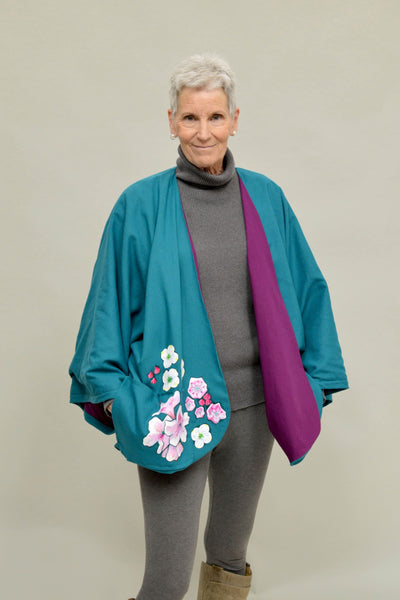
This simple, fully-lined jacket is the perfect piece - no matter the season. The roomy fit, simple open front design, and built-on sleeves create a lovely jacket that can be made with many different fabrics. The design features a back seam and side seams, patch pockets, and bound sleeve openings. Because this jacket form is so simple, it makes a perfect canvas for creativity. Show off your quilting, applique, fabric painting, or embroidery skills. Use coordinating or unique combinations of fabric for outer layer and lining - the possibilities are endless. This is also an easy project to make a reversible jacket (we will have instructions on our blog in January).
Available as a PDF pattern, on pre-sale now for 25% off (you will get a link for the pattern on January 1)

Our easy-to-sew, low-calf-length pinafore dress features two patch pockets with pocket bands and wide straps that button in front. A perfect everyday dress that can be worn in any season, it is practical and simple. Wear over a shirt and leggings for winter, or on its own or with a tank top for summer. This makes a great lounge dress, work/garden smock, or comfortable dress to wear out and about.
Available as a PDF pattern, on pre-sale now for 25% off (you will get a link for the pattern on January 1).

These simple, elastic-waist pants are super comfortable. Easy to sew and easy to wear, they feature a high-rise waist and front pockets with a pocket flap detail that is fun to embellish (add embroidery or buttons!). The waistband casing can be altered for a drawstring if that is preferred. Make these in a crisp cotton for work, twill for gardening, or soft flannel for lounging.
Available as a PDF pattern, on pre-sale now for 25% off (you will get a link for the pattern on January 1).

This easy-sew tunic pattern features a handkerchief hem, side vents, and dolman, three-quarter length sleeves. The fit is roomy and loose, making a comfortable and stylish piece to wear over leggings or jeans. The high neckline is closed in the back with a hook-and-eye at the slit. Gorgeous in silk for a dressy look or perfect in a rumpled linen, this tunic can be an everyday piece to wear again and again.
Available as a PDF pattern, on pre-sale now for 25% off (you will get a link for the pattern on January 1).

Available as a PDF pattern, on pre-sale now 25% off (you will get a link for the pattern on January 1).


Welcome back! Its Day Two of the Cynthia's Cookie Apron sew along and we will finish up the apron by adding the facing, get a quick lesson on how easy it is to roll seam edges for a clean garment edge finish, hem the edge on the apron, and consider different ways to finish and attach the straps.
Go here for Day One of the sew along.
Finishing the Center Front Seam (if not cut on fold)
If you cut your apron on the fold, this step does not apply. Since I cut my apron body in two pieces instead of on the fold, my apron has a seam on the center front. I have decide to finish the edges of the center front seam by simply turning the edges under and securing with a machine stitch close to the folded edge. Because my fabric is textured due to the pucker of the seersucker fabric, the stitching is barely visible.
However, this may not be the case for other fabrics. If you do not want to see the stitching on the apron front, you can hand-whip-stitch the turned under edge for a nearly invisible finish on the right side of the apron. You can also bind the edges or serge to finish edges. Finishing the center front edges should be done prior to attaching the facing and hemming.

Adding Facing to Apron
Facing Considerations: Facings are a great way to finish a garment's raw edges and strengthen areas that get a lot of wear, all at the same time. However, this apron can be made without the facing if you like, but you will need to consider how to finish the raw edges. Or, you could line the entire apron. Binding the edges with bias tape would also work, while also providing an extra design element to your project. A serged or zig-zag stitch edge would be a great option for an apron that needs to be made quickly. Depending on the weight or thickness, ribbon would also serve as a nice edging, but only if the ribbon will lay smoothly along the curved bottom edge such as Petersham.
Since this apron version is meant to be rather nice and I intend to wear it a lot, I am adding a facing. My fabric is a heavier medium weight, so I have not added interfacing. It is fine to interface the entire facing or just the straps area if you feel your fabric could use a bit of strengthening. If you intend to add interfacing now is the time. Add either sew-in or fusible interfacing to the wrong side of the facing.
Note: Use an interfacing weight that is close to or lighter in weight to the fabric you are using. Interfacing that is too heavy, will result in too much bulk, especially on corners and when the edges are turned.
Hint: Using fusible interfacing you can eliminate bulk in the strap seam allowances. Cut the interfacing just shy of the seam allowance. To do this cut the interfacing 1/4-inch (6mm) smaller than the pattern piece on all edges. This will give all the extra structure needed without the interfacing getting caught up in the seam allowance and it's stitching, therefore eliminating the bulk in the strap area. This will also allow for easier turning of the straps.
Sewing Facing: With wrong side facing up, turn under the bottom edge of the Facing B by ½” (13mm) and press. Top stitch close to turned under edge. Add interfacing to facing or straps now, if desired.
Note: To eliminate bulk at the bottom edge on the facing don't include the interfacing in the turning of the edge.


With right sides together pin and stitch the Facing to the Apron, using ½” (13mm) seam allowance around all edges.


Trimming the Facing Edges
Clip corners and curves, and trim the seam allowance of facing and apron where facing is attached. This eliminates bulk and makes turning the facing easier and allowing for nice pressed finished edges. Take your time to carefully trim the 1/2-inch (13mm) seam allowance approximately by half and clip curves, as shown below.
Clip off the turned under tails on each side of the facing .


Carefully trim the bottom edge of the facing where it is attached to the apron as shown below. Do not trim away any of the apron hem. The remaining turned edge at the bottom of the facing will neatly tuck into the inside of the facing when turned right side out. This will create an uninterrupted edge to the turned under edge and hem.


The photo below shows the edges you need to trim on the facing.
Hold On: Don't trim the strap ends unless you are confident about the strap length.

Once the seam allowances are trimmed by half, clip the seam allowances on the curves. This will release the fabric creating a smooth finished curved edge when the facing is turned right side out and pressed.

Note: Be careful to not clip into or beyond the stitching.

Clip the slightest of curves too. Even curves that are not well pronounced, benefit from clipping.

Clip the corners of the strap edges (if sewn up and confident of the length) and bib front.

Turn the Facing and Apron right side out. The edges and corners should turn easily. The straps are like any tube and are a little trickier, so take your time and turn the strap portion right side out slowly, until the strap finally appears.
Note: Surgical clamps with teeth are handy tweezer-like tools good for turning tubes, loops, or straps. Because of the sharp teeth take care not to damage your fabric. I could have used my clamps for this turning task. However, the straps were easy enough to turn with just my fingers.


Rolling the Edges
If you are new to edge rolling, or not quite sure of your technique, I am sharing what I learned to do.
Rolling the edges of a garment is a small detail that gives your work a professional finish. The idea is to roll the main fabric slightly over and towards the facing to keep the facing edge from peeking out and being visible on any garment you make. This is especially true when the facing is a different color or a different fabric all together from the fabric used to make the main body of the garment. This is not a hard task, but some areas like straps can be tight and fussy. Sometimes heavier fabrics need a bit of massaging to make them cooperate in order to make the edges roll nicely.
Because the seersucker fabric I used is on the heavy side of a medium-weight, with elastic thread woven into the fabric to make it pucker, I decided to roll the edges and pin them in place before pressing.
Hint: After taking the time and effort to roll the edges you will be happy you used pins to secure the roll in place. You can roll the edges when pressing if you like. However, I find it helpful to at least try to ensure some tasks will go well before handling hot objects.
Hint: Use glass tip pins when using an iron. Plastic tip pins melt leading to ruin.
I began rolling the edges that I could get my hands into first. Simply, use your fingers on both the top and under sides of the fabric and tease the apron edge towards the facing or inside of the apron. Once you have the edge rolled, pinch the seam on the right side edge with your fingers and pin to hold, then press, as seen in the series of photos below.
In the photo below, my fingers on my right hand are under the fabric (sandwiched between the wrong sides of the apron and facing) and my right thumb is on the right side of the fabric. I am using my left hand to pinch and finesse the roll.


Pins make pressing the roll edge easier.

Because of the way the straps are constructed, working your fingers on both the under and top sides is not an option. Instead, you will need to use a different technique. Roll the edges to the back of the strap towards the strap facing using your fingers in a rolling back and forth motion, until you can massage the fabric to a slight roll. Have a look at the video below to get the idea.
In the photo below you can see the edge of the strap slightly rolled to the back left edge starting at the bottom and working up the strap edge.

Hem the Apron
With wrong side of Apron facing up, turn and pin the side/bottom apron edge under 1/4-inch (6mm), then again 1/4-inch (6mm) and press. Top stitch close to turned under edge.
Tip: If you follow my blogs closely, you will have noticed how much I utilize a basting stitch guideline in my sewing. This technique eliminates having to measure as you go when turning or hemming an edge.
For this hem, machine baste 1/2-inch (13mm) from the edge. This stitch line can then be used as a guide to turn the edge under 1/2-inch (13mm), then turn under the raw edge 1/4-inch (6mm) or in half again, meeting the inside of the fold. Turn and pin as you go using the stitch line as a guide, then press and stitch the edge to finish. Once you are done stitching the hem in place, the basting stitch guide is easily removed.
You might be thinking... if the instructions tell me to turn the edge under 1/4-inch” (6mm), then again 1/4-inch (6mm)... then why not make a 1/4-inch (6mm) basting stitch to use as a guide. You can. But a 1/2-inch (13mm) guideline is easier to control and keep accurate.
If you look closely at the edge of the fold you can see the white basting stitch line guide.

Below the raw edge is turned under again into the fold.

Turning and pinning the hem takes time, but the basting stitch guidelines eliminates the need to measure.

Finishing the Straps
Try on the Apron with the straps crossed in the back to evaluate the fit. The straps are intended to be sewn on the outside front of the Apron, but you can also finish them on the inside of the Apron. It simply depends on if you want them to be visible.
Note: When it comes to straps, sometimes you really cannot evaluate how long they should be until the end. Aprons are not typically fit sensitive, but the length of the straps matter somewhat for comfortable wearing. Personally, I prefer to add extra length to my straps when cutting, just in case. Too much length can always be trimmed away. If you are making this as a gift, you should be fine with the strap length of the pattern.
If you added extra length to the straps and they have ended up being too long, trim the excess, but remember to include the seam allowance. Turn the edges to the inside for a nice finish. Press and stitch the edges together to close, using a machine stitch close to the edge or hand-whip stitch.
Once straps are the length you want, you can sew the straps to the apron front. Sew a small box 1.5”x1.5” (3.8x3.8cm) over the strap ends at the top of the apron front. This will secure the straps to the apron. If you want the straps sewn to the inside of the apron front, do the same as above, just put the strap ends on the inside of the bib.

OR if you are not in the mood for making buttonholes as it turned out to be my case, add a non-functioning button anyway, minus the buttonhole. Position the button on the strap as if using a buttonhole, then stitch it on going through the strap, and apron/facing layers. No one will know the difference. I added buttons to the pockets too... just because.


Hint: Snaps can be used as well. You could even use a snap to the underside of the strap (with its mate on the bib front) for practical reasons and add a button on the right side of the strap for a decorative touch. Large snaps will work best.

OR, if you want to add proper buttons and buttonholes to your apron. See the blogs Buttonholes 101: Part One and Two on Folkwear’s website if you need assistance.
Adjust the Straps
You can alter the fit of your apron by making the straps adjustable. Position the button on the bib as you normally would for a buttonhole and stitch it in place. Depending on the amount of adjustment you would like, make more than one buttonhole spacing them in even increments that you determine... maybe make two or three? Of course, you will need plenty of strap length to do this.

Since I am pretty sure you will make more than one apron, consider giving this a try. Making adjustable straps is especially handy if making an apron for a child in your life. Be watching for an apron for little people coming soon!
I hope you have enjoyed making the Folkwear Cynthia's Cookie Apron. It is truly a pleasure to share something I personally enjoy so much. I can hardly wait to see what you make! Please share your creations and include yourself "in action" wearing your apron on Folkwear's Customer Galley (if you purchased the pattern, you can review it with photos too!)
Happy Apron Making!!!
Cynthia
P.S. Don't forget to try my cookie recipe for the holidays.


By Cynthia Anderson
This is Day 1 of the sew along. For Day 2, go here.
Today I am going to start a sew along for Cynthia's Cookie Apron. This sew along will be two days, covering not only how to sew the apron, but all the tricks and tips for working with different fabrics and widths as well as options for finishing. Today we select and cut fabric and sew on the pockets.
Each day, I find myself slipping on this cross-back apron no matter what I intend on doing (not just baking cookies!) simply because I am addicted to so many handy pockets. Besides protecting your clothing with a really nice amount of coverage and adding an extra layer of warmth when it is cold out, this apron is as fun to wear as it is practical. If you are like me, you will make yourself an apron for gardening and dirty jobs, an apron for cooking, an apron for sewing and knitting, and an apron for house cleaning. And you can expect friends and strangers alike to want one too.
I decided to share this pattern through Folkwear, because I was asked "where did you get your apron" every time I wore it to the grocery store, hardware store, or the garden center. Yes, I often forget I am still in my apron when I go out. The practical charm of this apron seems to speak for itself.
This apron comes in a range of three sizes, Extra-Small/Small, Medium/Large, and Extra Large/2XL. Make it for yourself or make as a gift to someone special. Make it to liven up your holiday making or simply to enhance your everyday chores.
Front and Back Views

Gathering Materials
Fabric Choices: Any light to mid-weight woven fabric such as cotton and linen. Quilting cotton is a good choice as well. Sizes XS/SM will only fit on fabric 54” (127cm) or wider and MD/LG and XL/2XL will only fit on fabric 60” (150cm) or wider. See below for tips on using narrower fabric.
If there was ever a garment just begging to be used as a canvas for creativity, aprons are it. Mix and match fabrics, add trims, ribbon, lace, buttons, snaps, hand and/or machine stitching, embroidery, cross-stitching, appliques, hand painting, and anything else you can think of. Of course, there is a simple beauty in a simple fabric with a touch of top stitching or not. You cannot go wrong with anything you are inspired to create.
Notions: Thread; two ¾” (2cm) buttons for straps (optional).
Interfacing can be used for the facing, but not required depending on the weight of the fabric used. The straps can be interfaced and not the bib portion if you like. If using interfacing, ¼ yard (.23m) is required.
CUTTING YOUR FABRIC: Sizing, Adjustments, and Considerations
There are some adjustments to consider before cutting the pattern from fabric. You will first want to determine the size you want to make. This pattern has a lot of room for each of the sizes. You can go by the grade rule we have for it to get pretty close to the size you want. The bust is probably the most important measurement for this pattern since there is lots more ease everywhere else. But, remember the cross-back straps will also allow for some room as well. If you fall between measurements, you can likely go with the smaller size. If your measurements are larger than the pattern indicates, you can pull the center fold like away from the fold to add width to the pattern without other changes.
Also, before cutting into your fabric, predetermine the strap length required for comfortable wearing. If you would like the straps to be longer/shorter or to make them adjustable, add or subtract the length you desire to the ends of the strap portion of the pattern before cutting the fabric. Remember to add a seam allowance to the adjustment.
Hint: If you want to make your apron a bit wider, pull the center front edge of the apron body pattern piece away from the fold half the measurement needed.
Working with Fabric Width and Wide Pattern Pieces
This apron design provides nice coverage both front and back, but this makes the pattern pieces very wide. Due to this extra bit of roomy coverage, some fabric widths may be a bit too narrow for the pattern to be cut on the fold. This is not an uncommon occurrence when making garments with width and trying to use what you have on hand. Cutting on the straight-grain fold is ideal, but not always possible.
Depending on the width of your fabric and the size you wish to make, you may or may not need to cut on the crossgrain. Don't let less-than-ideal fabric width be a deterrent to making the larger sizes. Working with and around fabric width is an unavoidable aspect of the sewing experience. In this sew along I will share my thought process in working with a fabric I already had and making it work for this apron pattern, despite its narrower width.
Because my stash is a great place to shop for fabric, I decided on a mid-weight cotton seersucker stripe, which has a bit of holiday candy cane flair. Below, you can see how a size small fits on the fold (on grain) of this 52 inch (150cm) wide fabric. The fabric is a tad too narrow. Not to worry, there are options for working around this issue!


Cutting on the Cross-Grain
One Option would have been to cut my apron body on the fold with the fabric folded on the cross-grain. This would have forced the stripes to run horizontally on the body of the apron. Which would work, but was not what I wanted. However, this is a good project for cutting on the cross-grain, especially if using a solid fabric that is the same on both sides and does not have any directional concerns like nap. Luckily, lots of solid fabric fit this description.
Fabric that is stable can handle being cut on the cross-grain and is perfectly fine for this project. However, you do want to avoid cutting on the cross-grain if the cross-grain gives too much when gently pulled.
Cutting Using a Single Layer of Fabric
Another option is to open up the yardage, right side of the fabric facing up, so the fabric is in one layer and cut two sides of the apron making a center front seam. If you use the fabric in this way, it may be helpful to trace a second pattern for the apron body to make sure all the pattern pieces fit and lay out as they should.
Because I really wanted the stripes to run vertically, my only option was to open the fabric out flat for the positioning of the apron body pattern pieces. Because my fabric was the same on both sides and the pucker of the seersucker was not directional, it did not matter if the two apron body pattern pieces were not positioned going in the same direction.
Notice the Patch Pocket is positioned to be cut on the cross-grain and the Triangle Tissue Pocket is positioned to be cut on the straight-grain. Working with stripes is a great way to get creative.

Cutting two halves means you have a seam in the center front of the apron. Because, this method of laying out the pattern creates a center front seam, seam allowances are needed. You can add 1/2-inch (13mm) seam allowances to the center front of the apron when cutting out the pattern or simply pull the pattern away from the selvage edge 1/2-inch (13mm), as I ended up doing in the photo below. The nature of the seersucker fabric and the aligning of the stripes makes the center seam hardly visible.

Note: If the fabric did have directional issues to consider, then I would have needed a bit more yardage, so both apron body pattern pieces could be flipped and positioned going in the same direction while lying flat. Or, be sure the fabric is wide enough to accommodate cutting on the fold.
Learning to factor in "fabric width" is a part of the sewing experience. Simply put, fabrics come in varying widths and every sewist eventually is faced with "how do I make this work?"
Since my fabric was not wide enough to cut the apron body on the fold, I cut two pieces with seam allowances added. In the photo below the two apron pieces are pined and stitched with right sides together, using the 1/2-inch (13mm) seam allowance. The seam is pressed open. The only difference between cutting on the fold verses cutting two pieces is the center seam.

Below is a close-up view of the center seam of the apron body with the right side facing up. The pin indicates the center seam. Because of the seersucker fabric pucker and the aligning of the stripes the seam is hard to see.

Laying Out the Apron Facing. If cutting the apron on the fold, whether on the straight-grain or the cross-grain, then the facing should be cut in the same manner. If cutting the apron flat, you can either cut two facing pieces on grain, just like the apron body pieces, with added seam allowances, or cut the facing on the fold.
Even though, I cut the apron body laying flat with added seam allowances, I went ahead and cut the facing on the fold. Since the center front of the apron is sewn using a 1/2-inch (13mm) seam allowance, the apron is now the same width-wise as it would be if cut on the fold. So, the facing should fit perfectly.
Below the Facing and the Bib Pocket are cut one on the fold.

Cutting the Patch Pockets with Optional Tissue Pocket
Really deep pockets make an apron a great place for keeping things as you go about your daily "making and doing." The patch pockets on this apron design are not only deep, but they sit a bit high on the apron to prevent any objects from falling out when bending over. Another feature is the Tissue Pocket that really requires no explanation and is a nifty pocket for storing little things like rings, buttons, lip stick, as well as items that need their own specialized location like a tissue or hanky. Below are all the pocket pieces needed to get started. Notice how I switched the directions of the stripes to add a bit of whimsy and interest.

SEWING THE APRON
Patch Pocket
Fold under the long side edges and bottom edge of each of the rectangular Patch Pocket by ½” (13mm) and press.

Turn under the top edge of each patch pocket by ¼” (6mm), then again ¼” (6mm), and press. Stitch close to turned under edge.

Repeat for other Patch Pocket.
Triangle Tissue Pocket
The Tissue Pocket is sewn to the Patch Pocket creating a small triangular pocket to keep small things like rings or a tissue handy.
Turn under and pin the two angled edges of each Tissue Pocket by ½” (13mm) and press.

Turn under and pin the top edge of each triangle by ¼” (6mm), then again ¼” (6mm) and press.

Trim excess corners at each edge of triangle. Stitch close to turned under top edge.

Below is the right side view of the Triangle Tissue Pocket with all the edges stitched and trimmed. Notice the pin holding the bottom point of the triangle neatly in place before being added to the Patch Pocket.

Repeat for other Triangle Tissue Pocket.
Add the Triangle Tissue Pocket to the Patch Pocket
With wrong side of Triangle Tissue Pocket to right side of Patch Pocket, align the top edge of the triangle to the top edge of the patch pocket.
The pins on the top of the Triangle Tissue Pocket are used to provide extra hold when stitching. The top edge is not sewn closed.

Pin and stitch along the angled sides close to the two angled edges. Leave the top of the triangle open creating a triangle-shaped pocket.


Repeat adding other Triangle Tissue Pocket to the other Patch Pocket.
Bib Pocket
Turn under the two side edges and bottom edge of Bib Pocket by ½” (13mm) and press.

Turn under the top edge of bib pocket ¼” (6mm), then again ¼” (6mm) and press. Top stitch close to turned under edge.
Below is the wrong side of the bib pocket facing up, with the top edge turned under and stitched.

Adding Pockets to Apron
With right sides of apron facing up, place wrong side of Patch Pocket-Triangle Tissue Pocket Combo and Bib Pocket to apron front aligning with dots as indicated on the pattern. Pin and stitch each pocket close to the pocket edge on the side and bottom edges. Be sure to backstitch at open edges of pockets. Top edges are left open.
Note: When adding the Patch Pocket-Triangle Tissue Pocket Combo the pockets are positioned on the apron body at a slight angle when the apron is laying out flat. This is a trick that will allow the pockets to hang straight when worn. The pocket placement on the pattern might seem odd... but it is intentional.

Optional Pencil Pocket
To create a Pencil Pocket, stitch a vertical line slightly wider than a pencil through both layers of the Bib Pocket and Apron. You can make more than one pencil pocket or make additional pockets any way you like using this technique. I made a pocket for my spectacles the same way, by making the vertical stitching line a bit wider than my spectacles. Be sure to back stitch at the beginning and end if the vertical stitching line for stability.
Masking tape or removable tape makes a great stitching guide. Simply decide the width needed, being sure to leave a tad of room for an easy fit, then add tape as a guide, and stitch.
Below, the spectacle pocket is taped off on the left side of the bib and the pencil pocket is taped off on the right side of the bib pocket.

Using tape as a stitching guide is quick and easy. Just go slowly to avoid stitching into the tape. Notice the needle alignment to the tape guide below.

Stitching the on the left side of the tape, using the tape as a stitching guide to make the pencil pocket.

To make the spectacle pocket, the stitching is made on the right side of the tape.

When stitching is complete, simply remove the tape.

Now, the Patch Pocket-Triangle Tissue Pocket Combo and Bib Pocket are sewn to the apron body and the extra pockets on the bib are done too. Pockets make a great apron even better. Plus, after a busy day of making and doing, if something goes missing... just look in your apron pockets.

Join me on Day Two of the Apron Sew Along, to learn how to add the facing, finish the straps, and hem the apron. This pattern will be featured throughout the month of December and just in time for making yourself or someone special charming gift.

I can't quite believe that the holidays are upon us. We have again this year, compiled a Folkwear Holiday Gift Guide, divided into "gifts to make for others" and "gifts for the sewist". It is always fun to go through our patterns and sewing supplies and think about gifting them.
This year, we also have a brand new pattern (out tomorrow) that is just perfect for this gift guide - Cynthia's Cookie Apron. Read more about it below!
Gifts To Make For Others
First, this lovely apron, Cynthia's Cookie Apron, is a cross-back apron with buttons to make it adjustable. It has several pockets for all the things you might need to hold onto while in the kitchen (or garden or workshop). It is attractive and extremely practical. Make one or several for your friends and family. I made a similar one last year for my mother and husband and the both loved them. My mother has asked me repeatedly to make more of them so she could give them to her friends. And this apron comes with a cookie recipe too! This pattern will be available tomorrow!
Old-fashioned Oven Mitts. This is our newest free pattern! Make a set of oven mitts for the baker in your life. You can make these with pre-quilted fabric for quick and easy gifting or quilt the mitts yourself (not hard!).

146 Six Bags From Around the World. This pattern has a set of easy and quick to sew bags that are practical and fun. Many are also great to make as the gift wrapping too! You can also get the patterns individually if you just want to make one or two to gift (Japanese Carpenter's Bag is nice; also the Thai Shoulder Sling). The Japanese Carpenter Bag kit is great to make one to give or to give the kit as a gift.

305 A Japanese Interior. This pattern has lots of options for making home goods such as cushions or a futon mat.
Our other free patterns. We have a great carry everything bag, a cravat pattern, and a kimono ornament. These are all great little gifts to make and give!

Gifts For The Sewist
For your crafty friends and family, this class on Mexican embroidery at ThreadWritten, using our 142 Old Mexico Dress (and embroidery) pattern is going to be so fun! A really nice experiential gift that you could even do together!

Sewing Tools. We have a small set of really helpful sewing tools. From buttonhole cutters to bias tape makers, these are small but critical tools great sewing.

Bundles. We have several set of bundled patterns. These bundles are perfect to gift someone who has interest in these areas. You get a set of patterns at a discount and a nice little collection of similar patterns. Gift the Edwardian Outfit Bundle or Maritime Bundle to a friend who's into vintage. Or the Western wear bundle to a sewist who like costuming or western wear. Or the Kid's Dress bundle to make the children in your life some really cute clothes.
Gift card. We have several gift card options and these are great for a sewing friend or family member to get what they want in our shop!

And some of the favorite (for now) patterns of Folkwear staff - the ones they think would be great gifts.
Esi's pick: 205 Gibson Girl Blouse. A good base to make lots of fun blouses with many options for finishing (lace, collars, fabric, etc.). And it would be a fun challenge.

Victoria's pick: 250 Hollywood Pants. I love the knickers pattern - looks cute and comfy!

Cynthia's pick: 216 Schoolmistress Shirtwaist and Skirt. The skirt is so flattering, fun, and easy to make. It would be great in so many fabrics any time of year.

My pick: 231 Big Sky Riding Skirt. I made a pair of these (still sewing on buttonholes) and they are fun and flattering and a great (but not too big) sewing challenge. I love the pattern!


Pressing as you sew is as important as the stitches you put in the fabric. A garment will simply not look or fit right if you wait until it is completely put together to press it; in fact, it probably won’t go together very well at all unless you press as you sew. Refresh your pressing knowledge by reviewing these tips:

 Press seam flat first.

Then press seam open.


It is the third and final day of the 503 Poiret Cocoon Coat Sew Along and we will finish the coat by adding the lining, hemming the sleeves giving them a professional finish, and learn a couple of tricks using a length of chain to weight the hem and add some ribbon to create a hem finish that Poiret actually used himself.
Check out Day One and Day Two of the Sew Along to see what we have already done in making this fabulous coat! Today we are going to add the lining and finish the edges.
Linings have a way of making a garment even more special and the the Poriet Cocoon Coat is the perfect piece for learning how to add a simple yet beautiful lining. Do not shy away from adding a lining just because it seems complicated. It is not. If you have avoided adding linings to your sewing project, give this one a try.
There are times when you may opt to not use a lining. If using a fabric like a brocade, cross weave, or damask that is equally beautiful on both sides, then consider going sans lining, and let the fabric show it's entire beauty. However, linings are often a pleasure to wear. There is nothing more decadent than easily slipping in and out of a garment that feels and looks amazing. This coat design really does beg for a lining, because of the way it drapes and dips in the back, allowing for a beautiful lining to peek out. There is something intriguing about catching the glimpse of a lining that adds an unexpected twist to a garment.
Linings have the added benefit of easily and cleanly encasing the raw edges of all kinds of garments. However, adding a bound edge (bias strip) can allow for not only a clean finish but another excuse for a pop of color or for an interesting eye-catching effect. Of course, simply finishing the hem with a turned under edged finished is fine too if you are not using a lining.
I will be adding a ribbon detail to the hem of the coat. The ribbon serves a functional purpose as well as adding a finishing detail. Adding ribbon to a turned edge to finish the hem works well too. Simply stitch a ribbon to the raw edge of the hem and hand stitch to the lining.
Note: Use the 1/2-inch (13mm) seam allowance for turning the hem edges on this coat. Using a wider hem with not allow the fabric to lay flat along the curves.
Preparing the Coat and the Lining
Inspect the raw edges of the coat and lining before assembling them. Be sure to clean up any stray threads. Check to be sure the dart points have been tied off.
Clip the seam allowance along the curve of each sleeve and trim the sleeve seam allowances by approximately half. Depending on the fabric, simply make a clean trim or use pinking sheers. Clipping and trim the excess seam allowance will allow the sleeve seam fabric to release as intended. Press the seam allowances open or towards the back of the coat.


Repeat doing the same for the lining. Because my lining fabric is delicate I trimmed the seam allowance using a straight cut.

Pining the Lining to the Coat
With right sides together, line up the coat body with the lining, matching the notches and the seams allowances. Go ahead and slip the sleeve lining into the coat sleeves just ensure they do not accidentally get caught in the stitching.

Once you start matching the notches, you may need to to remove the pins and realign, which is the kind of adjustment you should expect to make with a garment with long curved shaped edges. I found this to be the case for me between notches 8 and 9.

Even though the bottom hem between both notch 9’s is not stitched for turning purposes, align and pin anyway, to ensure correct alignment. This may prove beneficial when using a slippery fabric like silk which can wiggle around.

Hint: Remember to pin within the seam allowance if using delicate fabrics, because pins often leave visible pin holes on silk and velvet. Use more pins to ensure all stays put if using slippery fabrics.
Tip: When machine stitching layers of fabric, especially if a slippery fabric is one of the layers, it helps for the stable fabric to lay on the feed dogs of the sewing machine. This makes sense when linings are often slippery. If both fabric layers are slippery, then using a removable or tare-away stabilizing material is highly recommended. Practice with a sample of both slippery layers of fabric sandwiched between a top and bottom pieces of stabilizing material to see how beautifully it helps.
Tip: Use a new sharp needle and stitching slowly will yield the best results.
Adding a Lining WITHOUT a Piped Edge Neckband:
Stitch the coat body and lining together as you normally would on the 1/2inch seam allowance. Begin with a back-stitch at one of notches labeled 9 at the bottom hem, stitching around the entire outer edge of the coat, ending the stitching at the second notch 9 with a back-stitch. Remember do not to stitch up the seam allowance between the notches labeled 9. There should be a gap or opening at the very bottom of the hem, which will allow for turning the coat and lining right side out.

Carefully press the seam allowances towards the lining.

Tip: If you are not accustomed to using a ironing cloth, consider investing in an inexpensive 1/2-yard (46cm) of silk organza in white or cream. Keeping an ironing cloth handy is an undervalued and sometimes life saver of a tool that helps to prevent damaging or scorching fine or delicate fabrics. The sheer quality of using either white or cream silk organza, will allow you to see through to your project while pressing. Even with the organza folded, creating a double layer, will allow you to see through to your work well enough.

Press the 1/2 inch (13mm) seam allowance under in the open hem area (between the 9 notches) for the coat body (and the lining to the wrong side). This step will provide you with a clean and correct turned under edge ahead of time for finishing the hem by hand.


Now, turn the coat right side out and press slightly rolling the coat edge in towards the lining.


Adding a Lining WITH a Piped Edge Neckband:
If using piping, first stitch main fabric and lining together at the collar with a machine-baste stitch. Then make a second pass of stitching using a zipper foot to allow you to get close to the piping on the neckband for a snug finish. Refer to the photos in Adding a Lining WITHOUT a Piped Edge Neckband (above).
Begin stitching at one of notches labeled 9 at the bottom hem, using a regular presser foot to baste the layers together along the 1/2 inch (13mm) seam allowance, stitching around the entire outer edge of the coat, ending the basting at the second notch 9. Since we are basting back-stitching is not necessary. Remember not to stitch up the seam allowance between the notches labeled 9. There should be a gap or opening at the very bottom of the hem, which will allow for turning the coat and lining right side out.
For the final stitching, change to a zipper foot, to allow you to stitch close to the piping.

Note: Because the piping is sandwiched between the lining, and the neckband, plus the coat fabric, you will not be able to see the edge of the piping when stitching close to the piping with the zipper foot. This why keeping everything properly aligned on the 1/2 inch (13mm) seam allowance is important.
Hint: Hand baste close to the piping to help create a guideline for the final stitching with the zipper foot if you feel the need.
Sewing blindly with piping, is a bit tricky and basting (whether by hand or on the machine) allows for a first pass that can be then be adjusted when stitching again with assistance of the zipper foot. If you have a mishap, don’t worry. If the piping does get caught in the stitching, the needle can be moved away from the piping and you can re-stitch. If the stitching is not close enough to the piping, then the needle can be moved closer and re-stitch. Once the correct stitching is made, then the incorrect stitching can then be removed.
Take your time stitching around the angled bottom edges of the neckband. Check to be sure the lining and the coat align properly, look for puckering or any caught stitching that may have accidentally occurred. Once again, if the first pass is not perfect re-stitch where needed. Remember, sewing in sections is perfectly acceptable. You can see by my stitching below, how I had to adjust my positioning to make the stitching align close to the piping.

Carefully press the seam allowances to wards the lining.
Press the 1/2 inch (13mm) seam allowance under in the open hem area for the coat body and the lining to the wrong side. This step will provide you with a clean and correct turn under edge ahead of time for finishing the hem by hand.
Now, Turn the coat right side out and press slightly rolling the coat edge in towards the lining.
Adding a Decorative Ribbon to the Hem
This is an optional step, but one you should consider, because it can serve a functional purpose as well as adding a finishing detail. Depending on the drape of the lining fabric, and because of the cut of the bottom of the coat, the lining can sometimes fall away from the bottom edge. For this reason the ribbon helps to support the lining and provides a stable place to add a few hand stitches to tack the lining to the coat. If after trying on your coat you find that your fabric does this, hand stitch the inner edge of the ribbon through all the layers, taking tiny invisible stitches through to the outer layer.
Hint: Ribbon wider than 1 inch (2.5cm) may be tricky to get to lay flat along the curves of the coat, so we recommend a ribbon less than 1" wide. The weight of the ribbon is also be a factor. Thick or stiff ribbon generally is not as pliable and light-weight ribbon. For this reason grosgrain ribbon is not recommended. Bias tape or bias ribbon can be used, as well Petersham. I am using a 1-1/2 inch (3.8cm ) silk bias ribbon from Hannah Silks. Even though my ribbon is a bit wide it lays nicely along the curved edge of the hem without problem.

The ribbon can be added when finishing a turned edge too.
Note: Hand wash and air dry your ribbon before using. Not all ribbon should be laundered. Pay attention when you purchase your ribbon if it can be laundered. Press ribbon on low heat to ready for applying.
The instructions tell you to begin at the center back of the lining hem with a slight overlap, lay the ribbon on the seamed edge of the lining with the edge of the ribbon along the seam line. Pin or baste the ribbon in place around the inside edge of the entire coat, but only to the lining and seam allowances (not the coat body fabric). At the center back hem, overlap the ends of the ribbon, folding under the raw edges to create a finished overlap.
Because I do not have enough ribbon to go all the way around the inside of the coat, I decided to only apply the ribbon running along the bottom of the hem. I begin and end the ribbon close to the bottom edge of the neckband. For this reason I did not start with overlapping the ribbon at the center back.
The idea in positioning the ribbon, is to only align and pin the bottom edge of the ribbon to the lining and the seam allowance underneath, while not catching the coat fabric in the pinning. Place your finger between the coat fabric and the seam allowance so you can feel the pin catch the seam allowance. If you are not sure, go ahead and pin the lining and the coat together at the outer edge and then place your fingers between the the lining and the coat fabric, then it will make sense. Notice the positioning on my fingers on the left hand.

See my thumb helping align and hold the ribbon to the lining and seam allowance underneath.

This is what the inside should look like ( the seam allowance between the lining and coat body fabric), with the ribbon pined to the lining and the seam allowance. You want to stitch the bottom edge of the ribbon to the seam allowance to provide to give it extra strength and stability.

Reaching between the outer fabric and the lining, hand stitch the ribbon to the lining and seam allowances along the outer edge first.
OR, I chose to machine stitch the bottom edge of the ribbon to the lining at the stitching line. I had to maneuver my work under the presser foot being careful that the bunched up fabric did not get caught in the stitching by accident. I took my time, sewing slowly, adjusting the fabric as I went.


Then using a steam iron, steam the ribbon as necessary to lay nicely along the curve of the coat hem edge. Stitch the inner (top) edge of the ribbon to the lining only. The bias silk ribbon I used rounded the curves without needing to use a steam iron. Pin ribbon to the lining and hand stitch in place.
Hint: In order to only pin the ribbon to the lining, I put a French curve or something flat with smooth edges between the lining and coat layer to help with pining. This helps to avoid catching the coat body fabric in the pining. Look closely at the photo below and you can see the French curve sandwiched between the coat body and the sheer lining.


Adding the Optional Weighted Chain
The hem of the Poiret Cocoon Coat will drape and hang even more beautifully if weighted. This is not an uncommon finishing hemming technique, but one often forgotten about. The pattern calls for a 24-inch (61cm) of chain, which can be purchased at any craft shop that sells jewelry supplies. The weight of chain should correspond to the weigh of the fabric that needs weighting. Just about any necklace or bracelet weight will work for light to mid-weight fabrics. Avoid a chain that is large enough to look lumpy when laying in the fold of the hem.

At the center back of the coat body hem opening, insert the chain weight into the fold of the pressed seam allowance, centering the chain on the center back seam.

Tip: Use a few tiny widely spaced (2-inches (5cm)) of hand stitches along the length of chain to secure and hold the chain in place.

Pin and hand stitch the seam allowances at the bottom edge of the ribbon using tiny stitching. Pin the pressed edge of the lining slightly above the pressed folded edge of the coat. Hand stitch the lining to the coat along the bottom edge of the ribbon. Catch the seam allowance of the coat hem and and a small amount of the ribbon/lining fabric, while avoiding catching the outer coat fabric in the stitching.

Finishing the Sleeve Hems
Learning to properly hem sleeves is a tailoring technique that can be used on any garment with lined sleeves. This techniques holds the lining in place and keeps it from being visible at the edge of the cuff, creating a lovely finish.
Turn and press the sleeve hems of both coat and lining to wrong side on the 1/2 inch (13mm). Apply the ribbon to the pressed (right side) edge of the lining, beginning and ending the ribbon with an overlap at the seam. Stitch the ribbon to the lining along both edges of the ribbon. You can do this by hand, but I had not problem using the sewing machine.


With the ribbon edge of the lining slightly above the folded raw edge of the coat sleeve, hand stitch the lining to the coat along the edge of the ribbon.


Adding the Button or Frog Closure
The loop-mate for the button was added in the last step on Day Two of the Sew Along. If using a button, sew it to the wearer’s left side of the coat as marked on the pattern piece. It is ok if you need to adjust the button placement to ensure it aligns with the button-loop... I did. Be sure the button slips smoothly through the loop and is secure at the same time. When adding the button, stitch through all the layers for a strong hold.
Tip: When sewing buttons to fabric with multiple or thick layers try using a heavier weight thread sometimes referred to as button twist.


If using a frog closure, add the ball side to the wearer’s left side of the coat front, as marked on the pattern for positioning. Sew the loop side of the frog at the point of the neckband as indicated on the pattern, adjusting if needed to make the frogs fit securely.

Note: Whether using a button or frog closure be sure the front overlap of the coat edge is aligned straight up and down, and not crooked.
For an extra bit of closure security, you may want to add a snap or add ties to the opposite end of the neckband and the corresponding point on the lining to keep the underlap in place.


Often when I remake a design made by someone who actually made history, I wonder if the inspiration I had in making the garment some how got back to the originator? If so, I hope Paul Poiret where ever he may be, took pride in knowing that his iconic Cocoon Coat, is still being made and enjoyed by sewists. Make your own coat wearing history using the Folkwear 503 Poiret Cocoon Pattern soon!

Join the talented Sarah Pedlow of Threadwritten Textiles for a virtual embroidery workshop concentrating on stitches and designs for the 142 Old Mexico Dress pattern. This workshop takes place on January 22, 2022, and registration is open now. Save your space and have something to look forward to in the new year!
Learn more about the workshop and register here. The embroidery pattern is included with your registration.
Get the 142 Old Mexico Dress Pattern here.
Watch a video about how to cut the yoke from this pattern


 Basics Collection


